

THE UNDER-DASH CRUSADE: WE HAVE LIGHTS (FOR NOW)
If you’ve ever tried to do under-dash wiring on a modern vehicle, you know the grueling routine: you slide the seat back, twist your spine into an unnatural angle, wedge your shoulder against the door sill, and pray your flashlight doesn't drop directly onto your face.
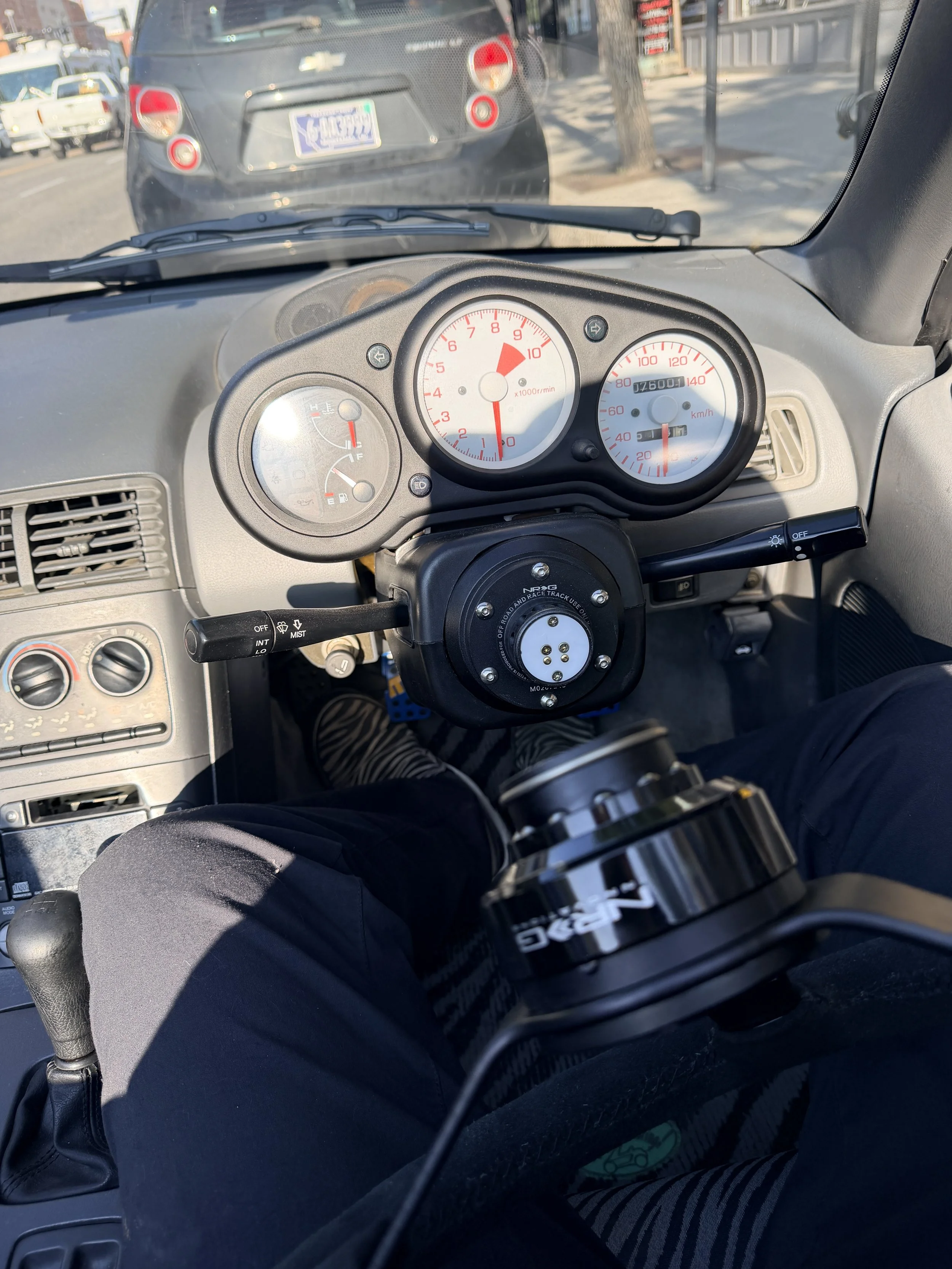
On a 1991 Honda Beat, it’s a completely different story—mostly because the cockpit is the size of a laundry basket, but also because this car has a secret weapon for maintenance convenience: a quick-release steering wheel.
The Ultimate Maintenance Cheat Code
My Beat came fitted with an NRG quick-release steering wheel setup, and I didn't realize how much of a lifesaver it would be until I had to dive under the dash this week to sort through a massive list of electrical gremlins.
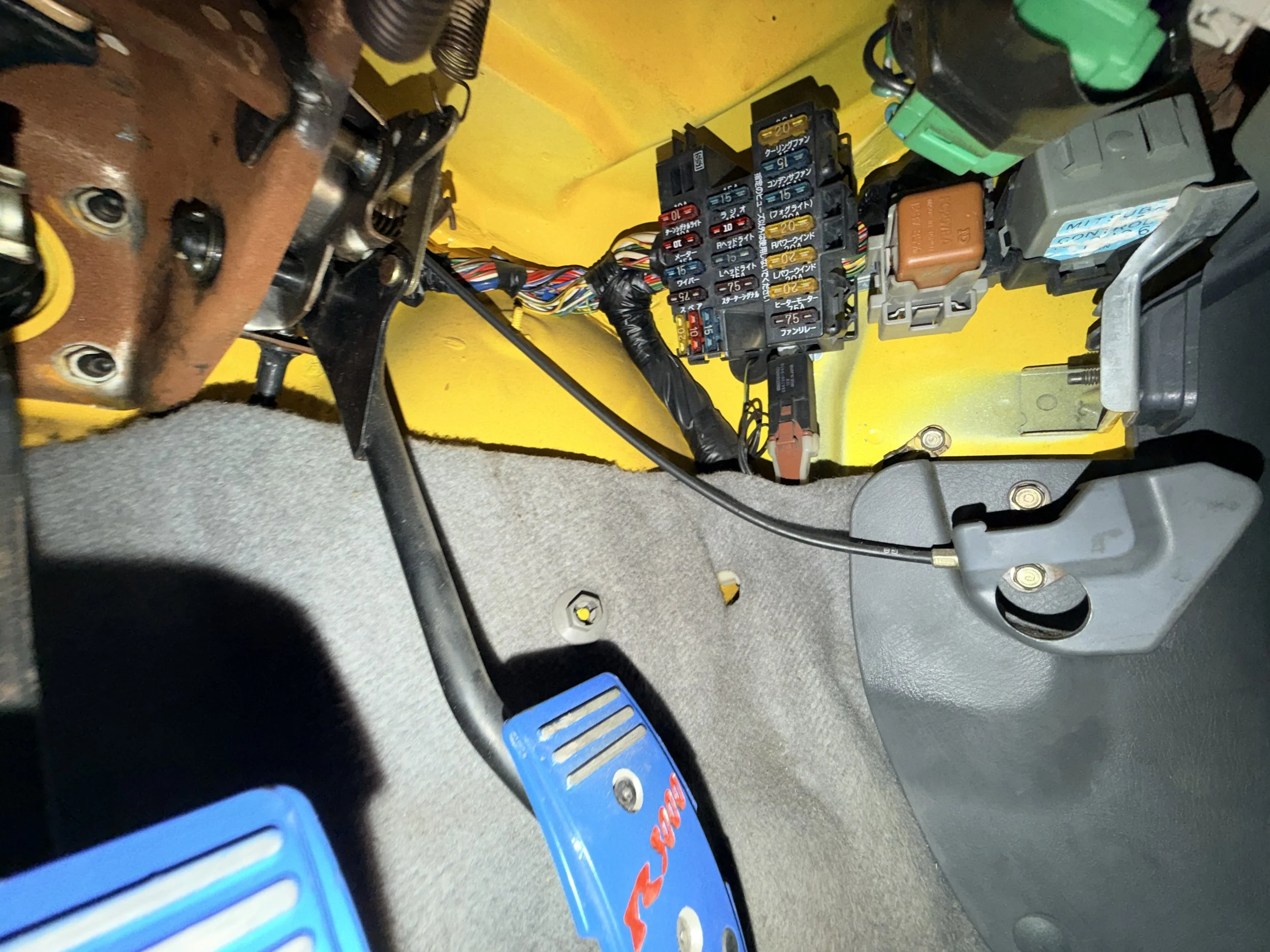
When you pull the collar and pop the wheel off, the driver's side footwell suddenly opens up completely. You don't have to contort your body around a fixed steering column just to see what you're doing. I can sit comfortably on the seat cushion, lean forward, and look directly down at the pedals and the interior fuse panel without breaking my back. Every project car needs this exact setup.
Deciphering the JDM Fuse Box (Thanks, Google)
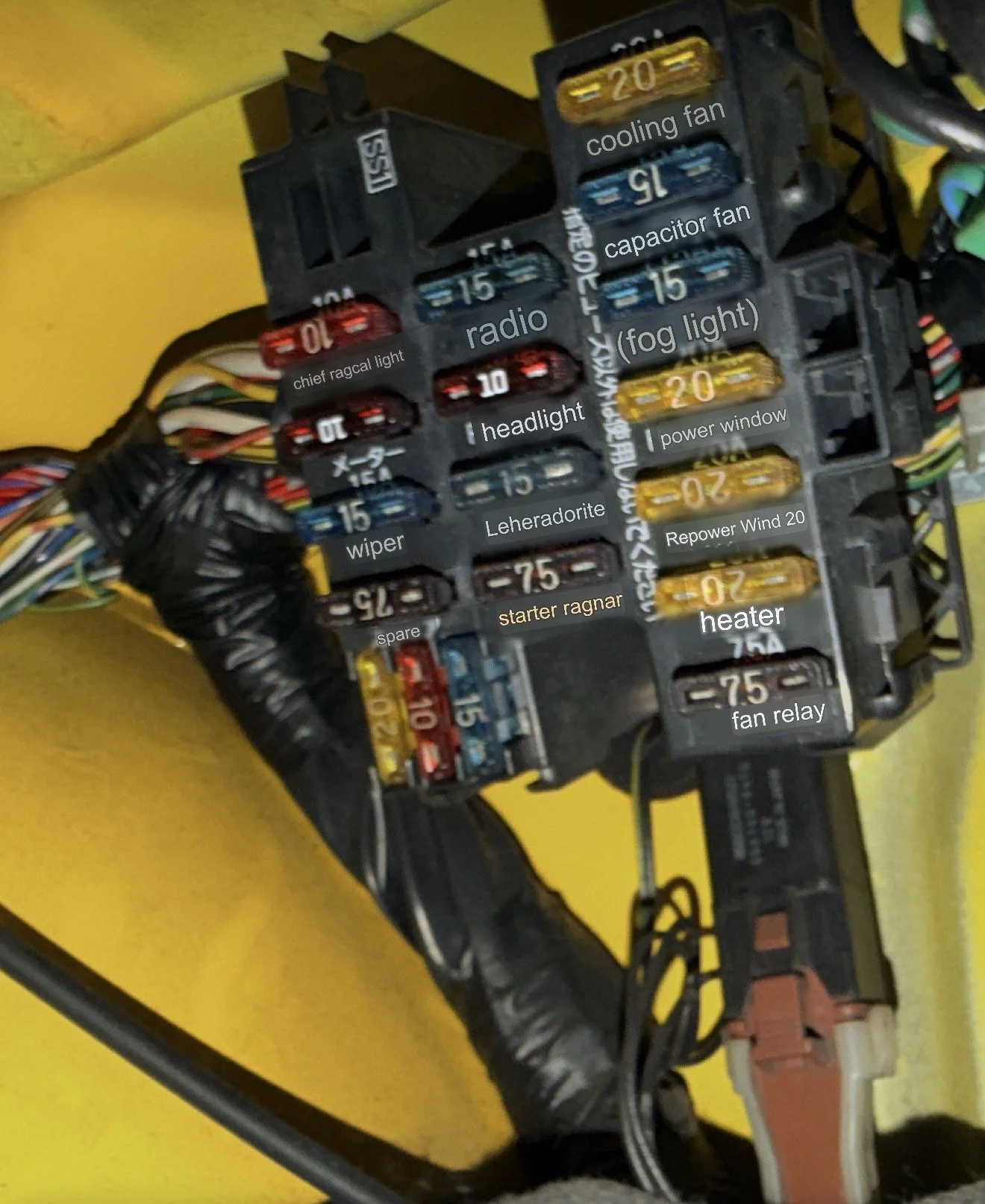
Once the wheel was out of the way, I was faced with the ultimate rite of passage for any imported vehicle owner: a fuse panel entirely labeled in Japanese characters.
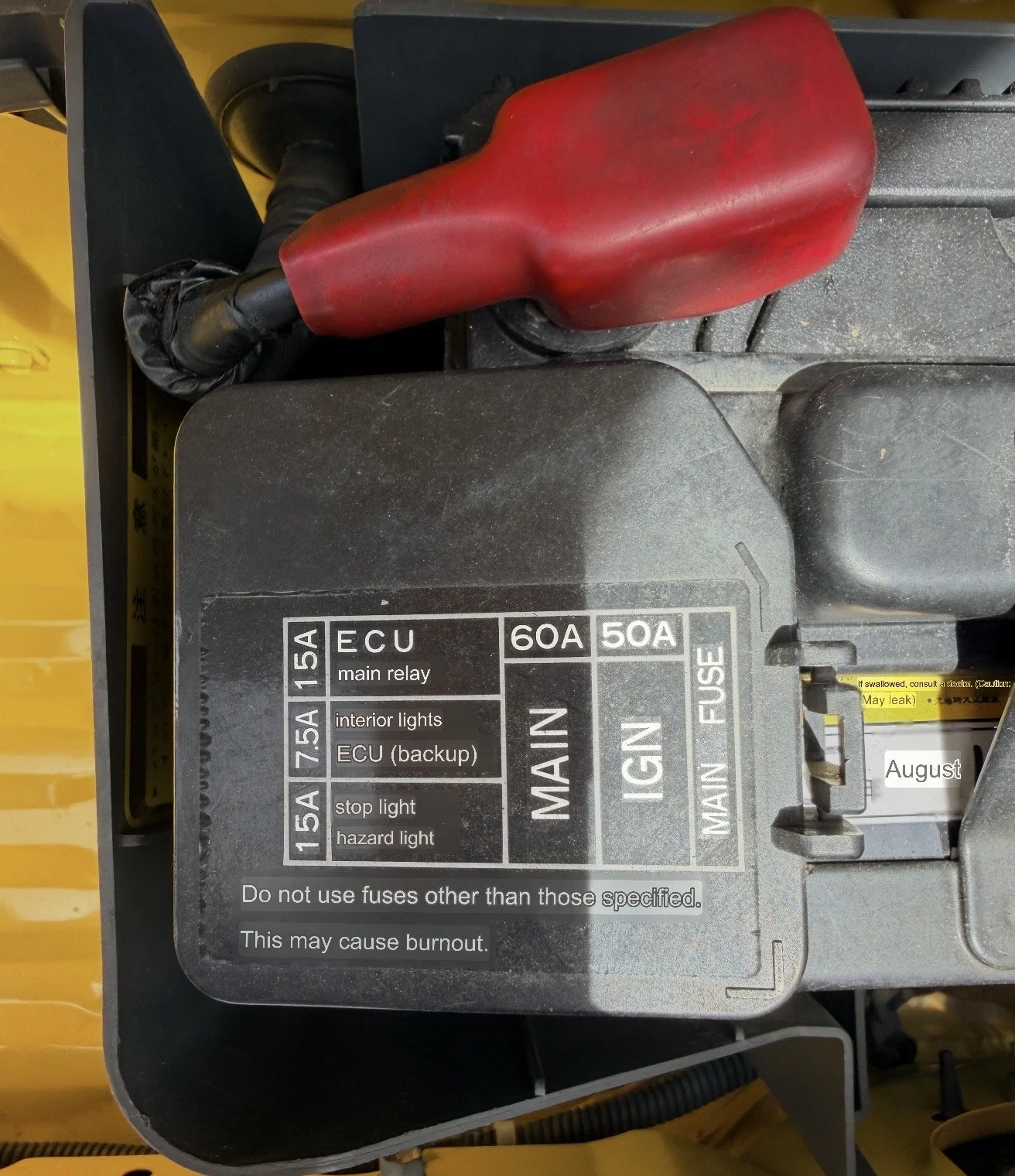
Instead of guessing blindly or spending hours digging through archived 90s forum threads, I pulled out my phone and let Google Translate’s live camera view do the heavy lifting. Pointing the phone right at the plastic cover under the dash instantly swapped the Japanese characters for English text right on the screen, letting me trace the circuits directly.
UPDATE: We Have Lights! (For Now...)
When the shipper dropped the car off, the electrical situation looked less like a functioning Japanese sports car and more like a ghost town. I received the car with:
No brake lights
No tail lights
No cabin power
No horn
...the list just went on and on.
For a minute there, I thought I was about to inherit an absolute wiring nightmare. But pairing the visual translation with the unmatched physical access of the removable wheel made diagnosing a breeze. I traced the dead circuits, swapped out the blown fuses under the dash, and—miraculously—the Beat snapped back to life! The cabin lights glow, the horn honks, and the tail lights are officially signaling that this little yellow rocket is operational.
Now, the real test begins. Cross your fingers. Seriously, cross all of them.
We’re officially in the "wait and see" phase to see if this was just a fluke from the car sitting, or if there's a hidden, wire-chafing gremlin waiting to pop a fresh fuse the second I hit a bumpy road. If you see me stranded on the side of the road with a pocket full of 15-amp fuses and my smartphone out, you'll know what happened.
But for now? We ride.
Pop the wheel, scan the tag, never lift.
