

Montana • Ringing Rocks • 2017–2023
The RocksThat Ring
Ringing Rocks, Montana: what makes the rocks ring, how to get there and what six trips taught me about the trails around them.
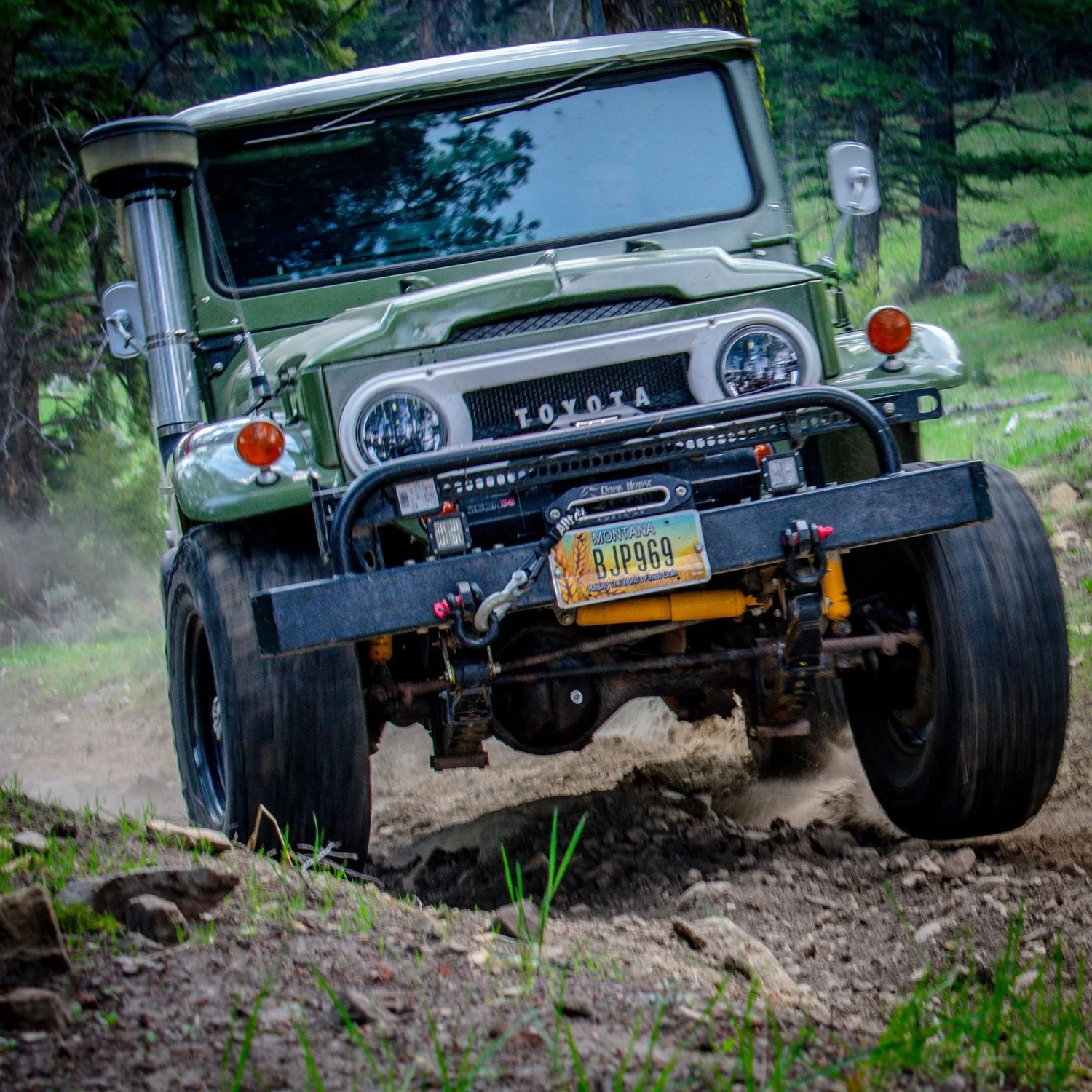
A Pile of Rocks That Sounds Like Bells
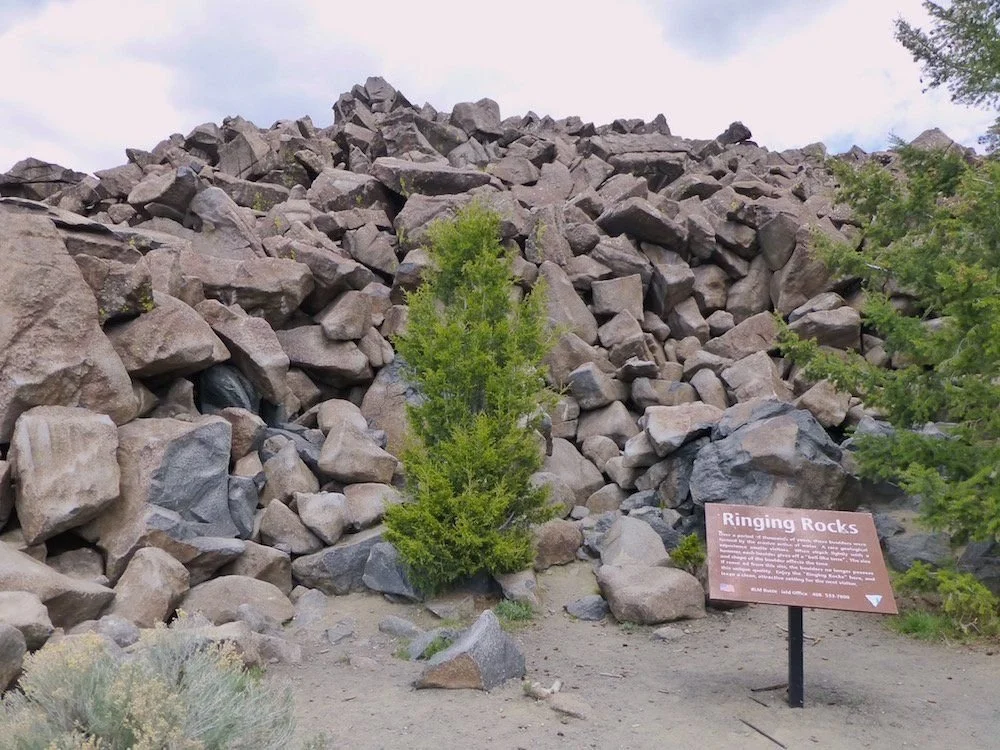
East of Butte, up a rough road off I-90, there’s a jumbled pile of dark boulders on a ridge. Tap one with a hammer and it rings. Not a thud. A clear, metallic tone, and the next rock over rings at a different pitch.
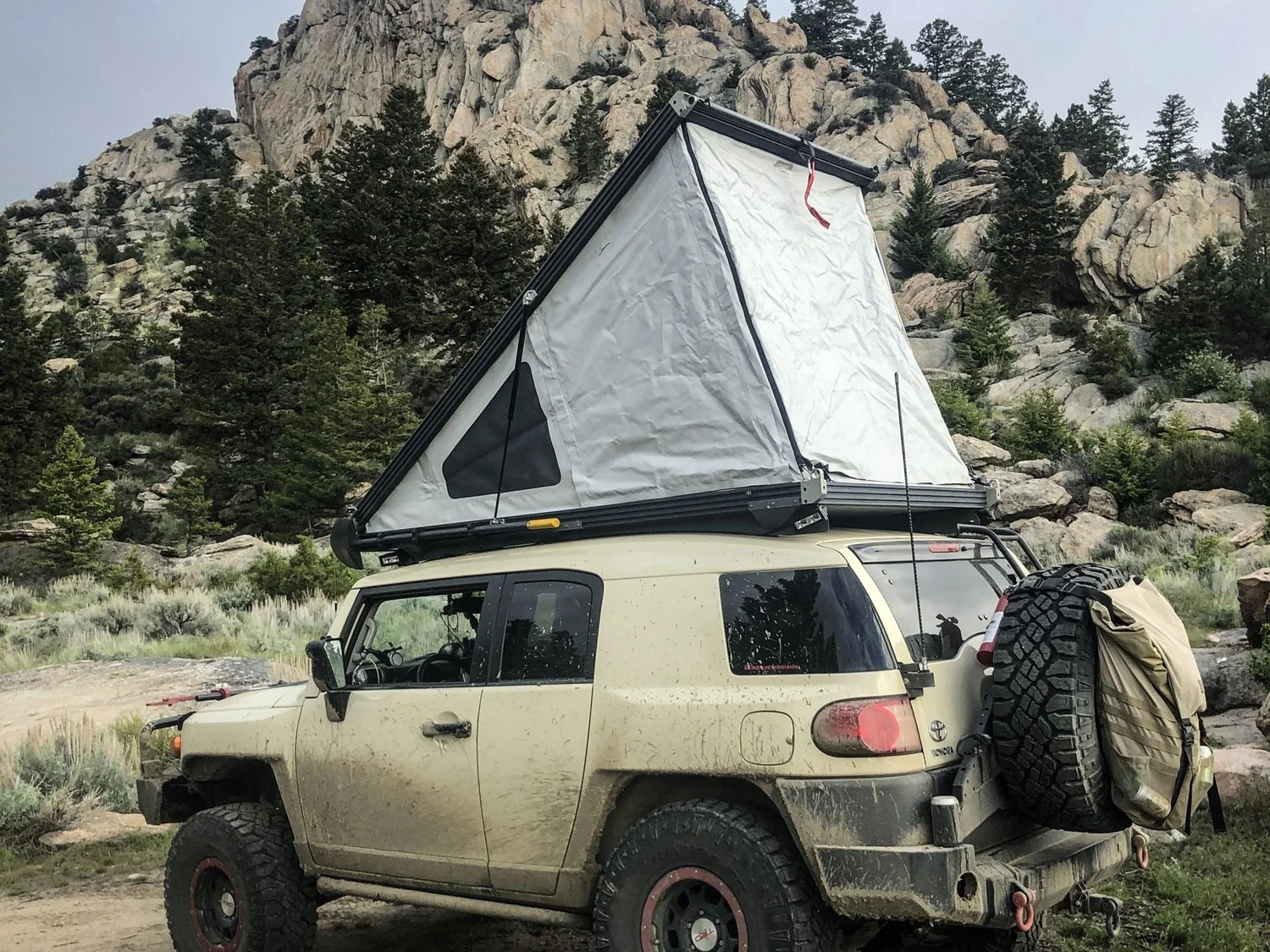
I’ve been out to Ringing Rocks and the trails around it six times between 2017 and 2023, mostly in my tan FJ Cruiser and once with the 406 Cruisers club. Here’s what you need to know.
Why They Ring
Nobody has a complete answer, which is half the fun. According to a BLM geologist quoted by KXLF, the rocks are very dense, their grains interlock and create tension, and they sit loosely with lots of open space between them, which lets the sound carry. How the pile formed is still debated. One theory is rising gas lifting jointed rock that then fell back with gaps. Freeze-thaw cycles may have helped.
Here’s the part that matters: a rock taken out of the pile, or buried in dirt, stops ringing. So don’t take one home. It won’t work there anyway.
Only a handful of places in the world do this. One of them is a short drive from Butte.
How to Get There
Ringing Rocks is on Bureau of Land Management land managed by the Butte Field Office, about 18 miles east of Butte. Take I-90 to the Pipestone exit (241). Head east on the gravel road that runs along the interstate for about three-quarters of a mile, turn north, cross the railroad tracks and continue about 3.5 miles.
The BLM says a high-clearance vehicle is necessary. The last stretch is steep and rough. There’s no fee.
Bring a hammer or a big wrench. Tap, don’t swing. The point is to hear them, not to break them.
The Trails Around the Rocks
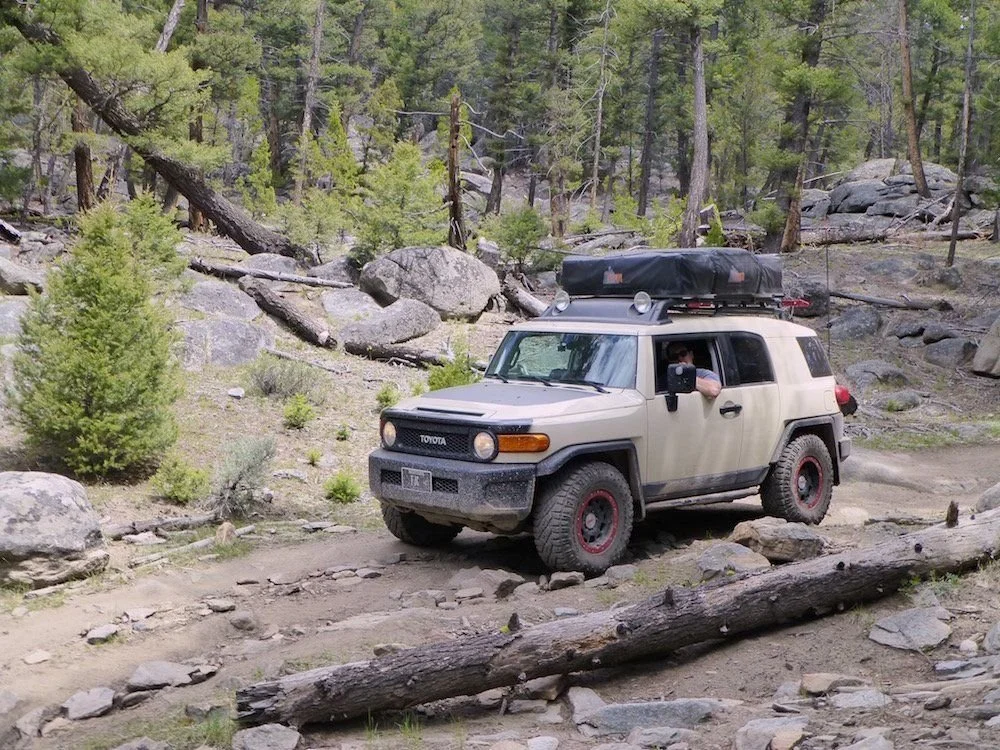
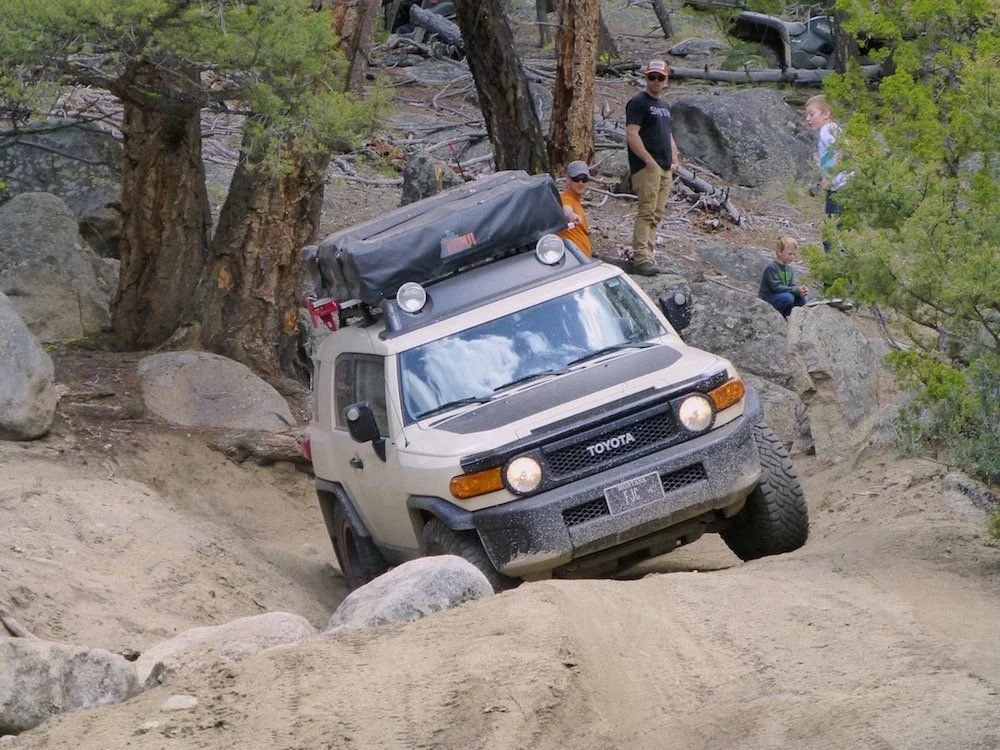
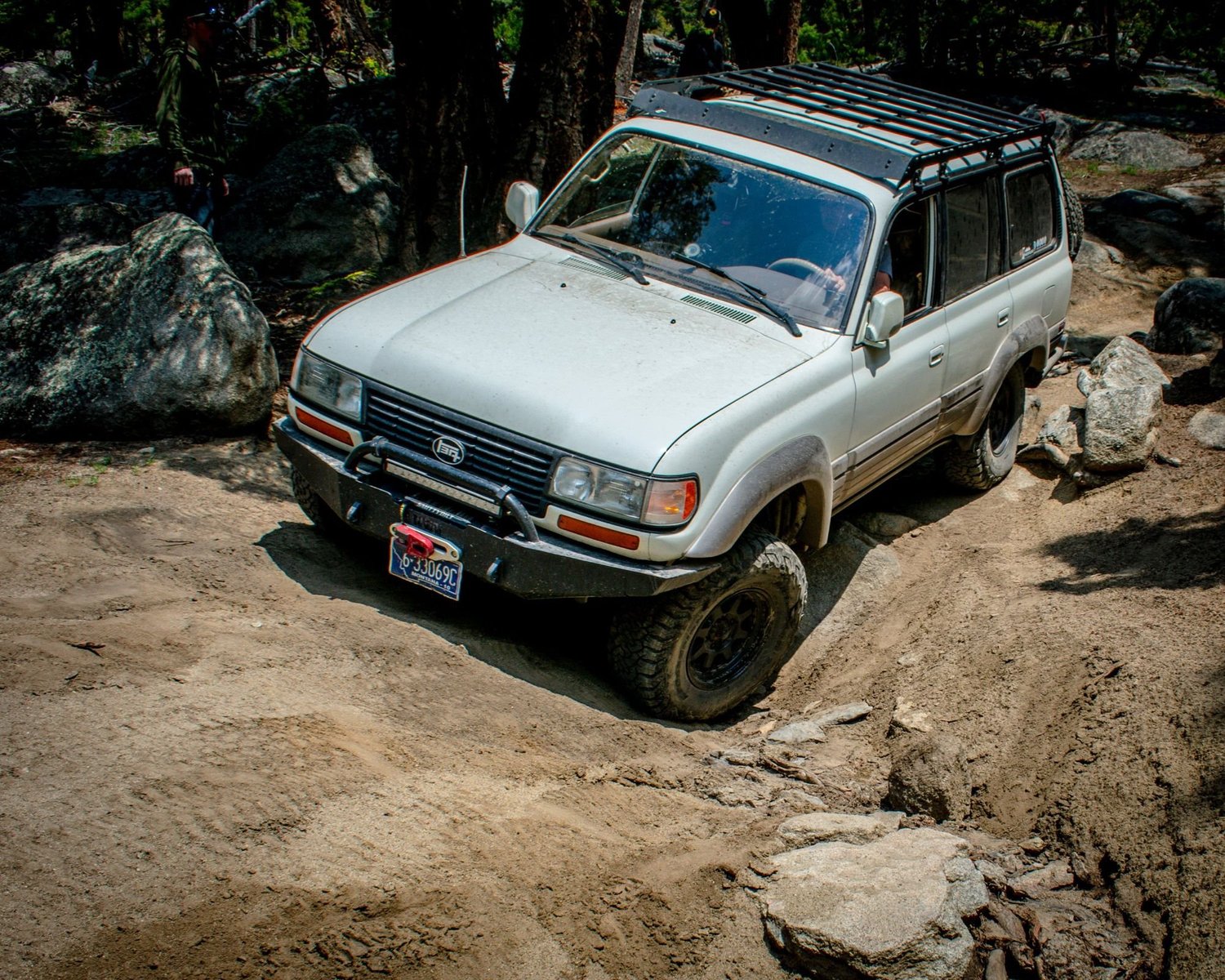
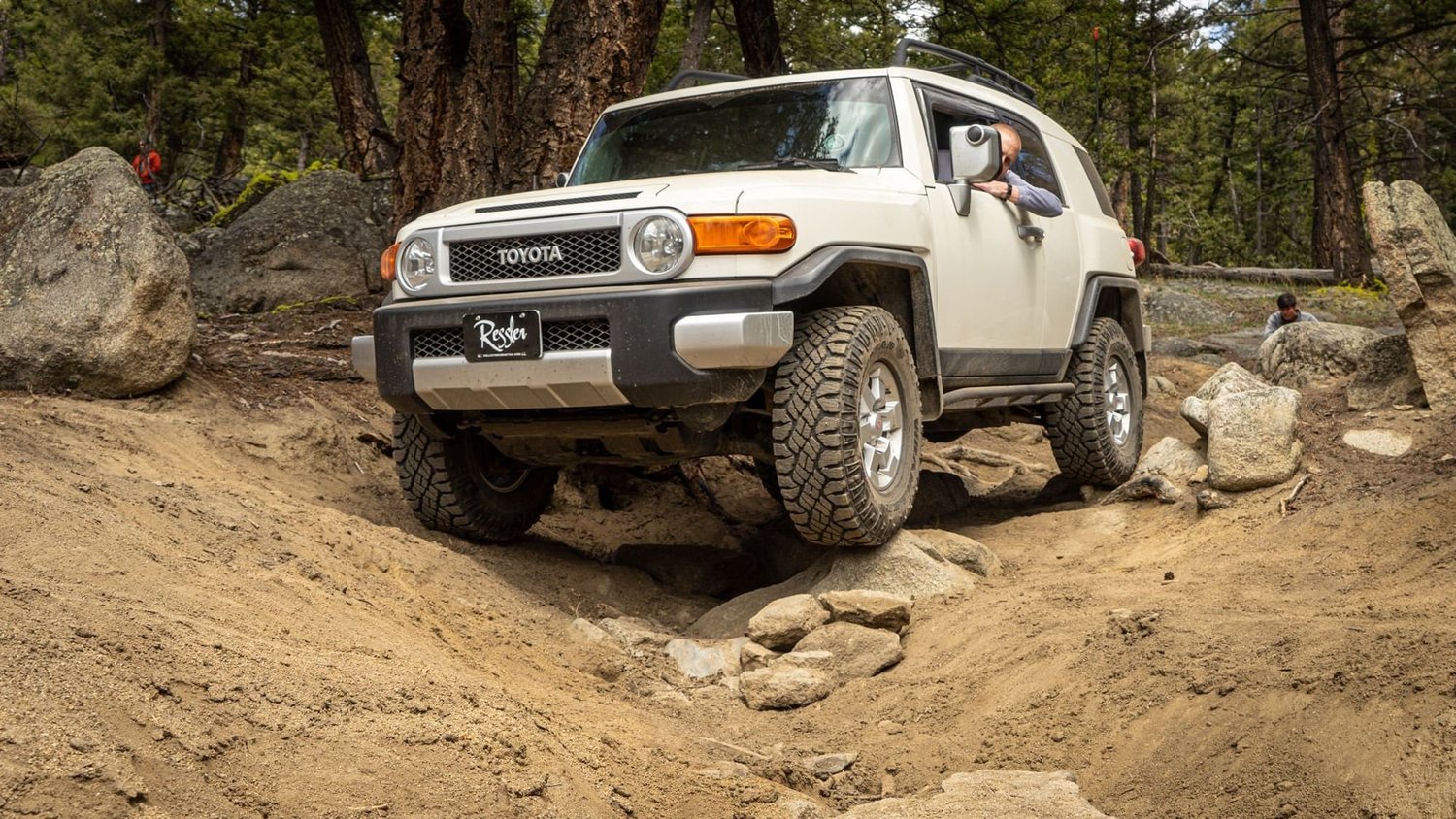
The rocks are the destination, but the trails around them are why we keep going back. The country here is the edge of the Boulder Batholith: big granite slabs, rounded boulders, squeeze gaps between them, tight sandy ruts and creek crossings that run high in late spring.
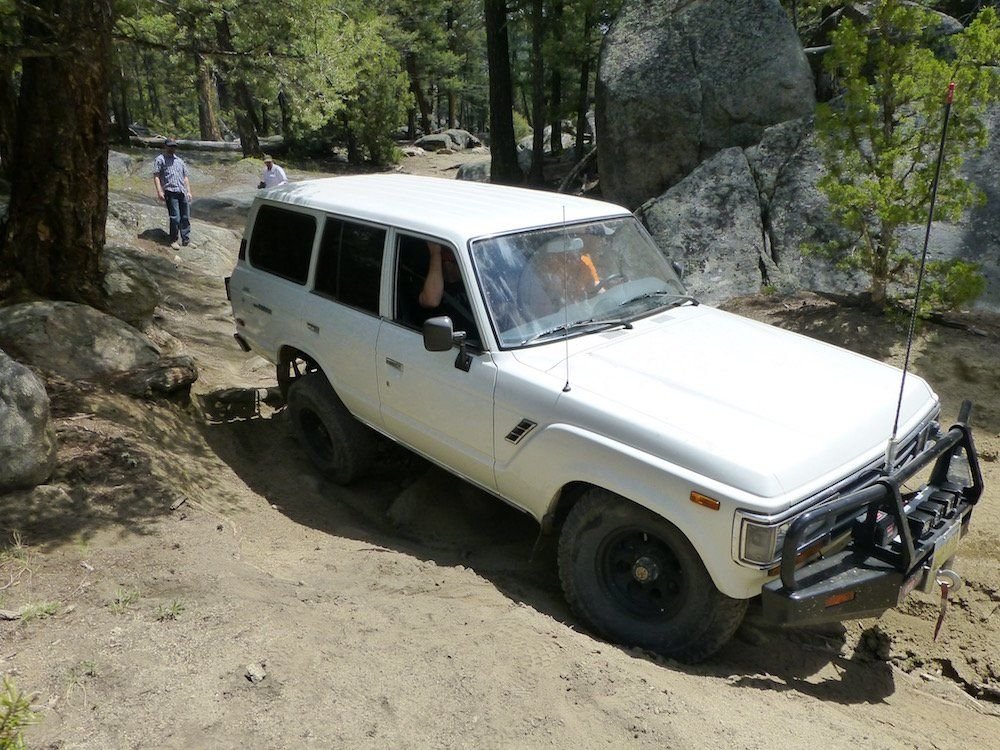
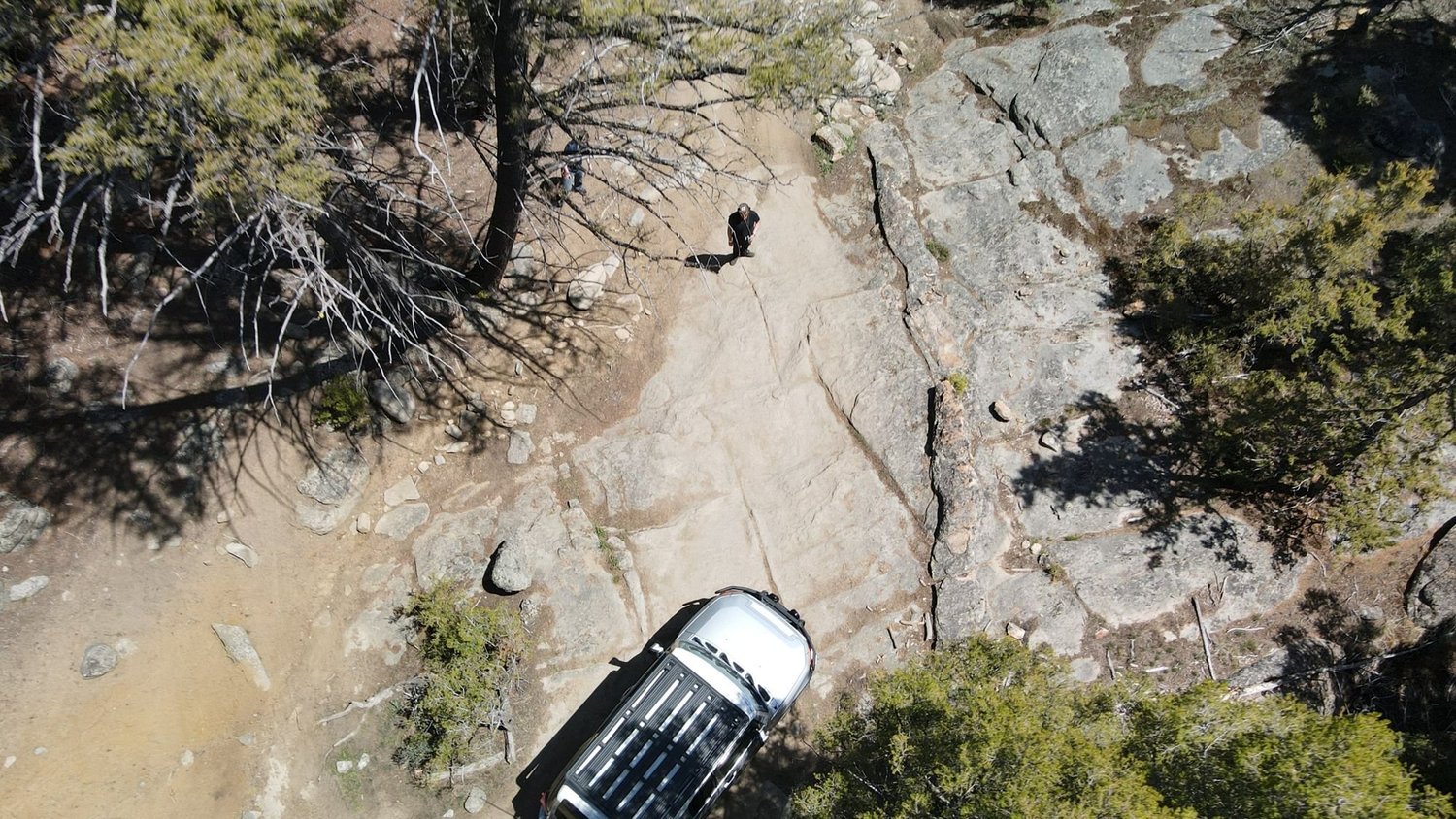
Granite slabs. Grippy when dry, slick when wet. Pick a line, keep the tires on the rock and let the suspension work.
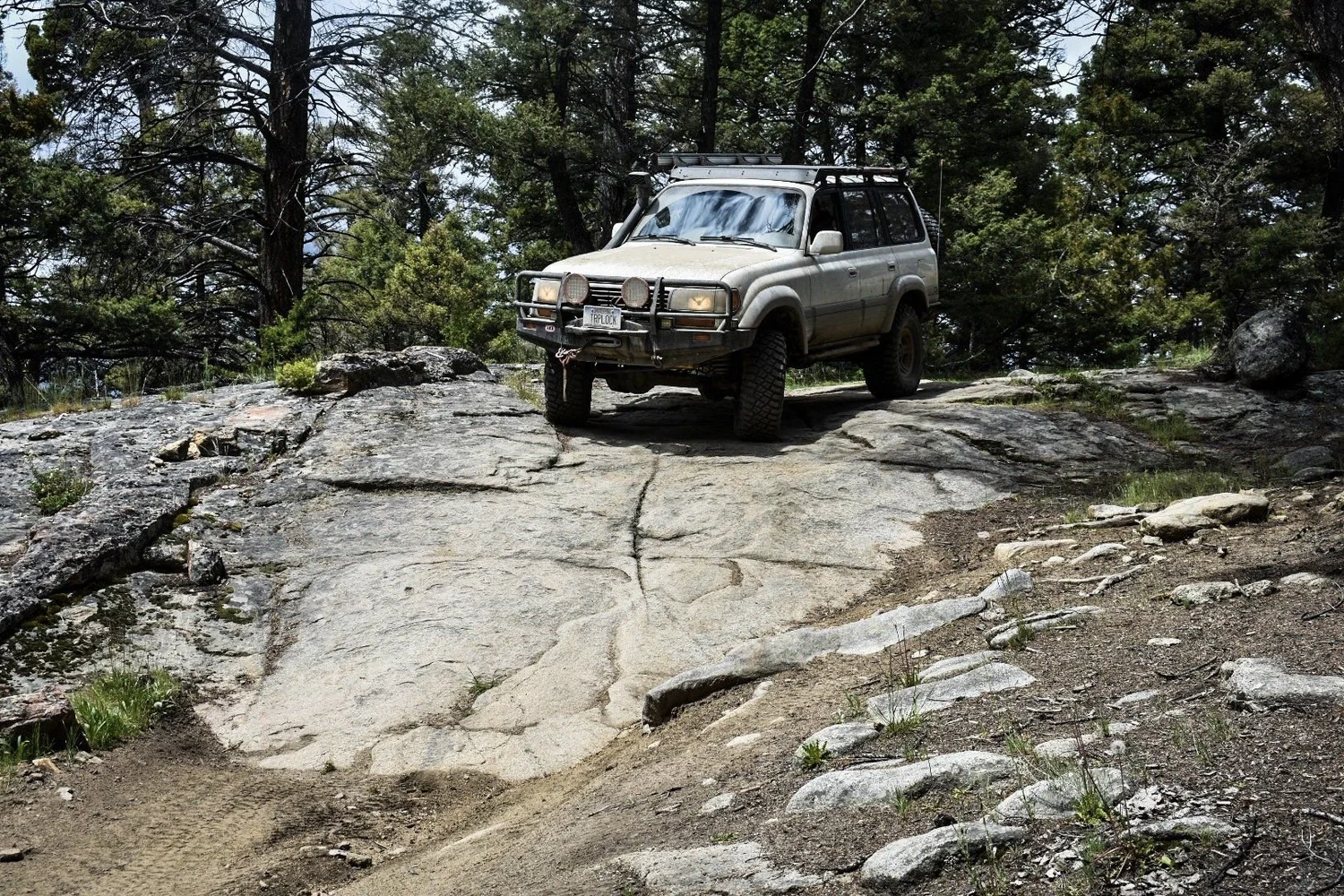
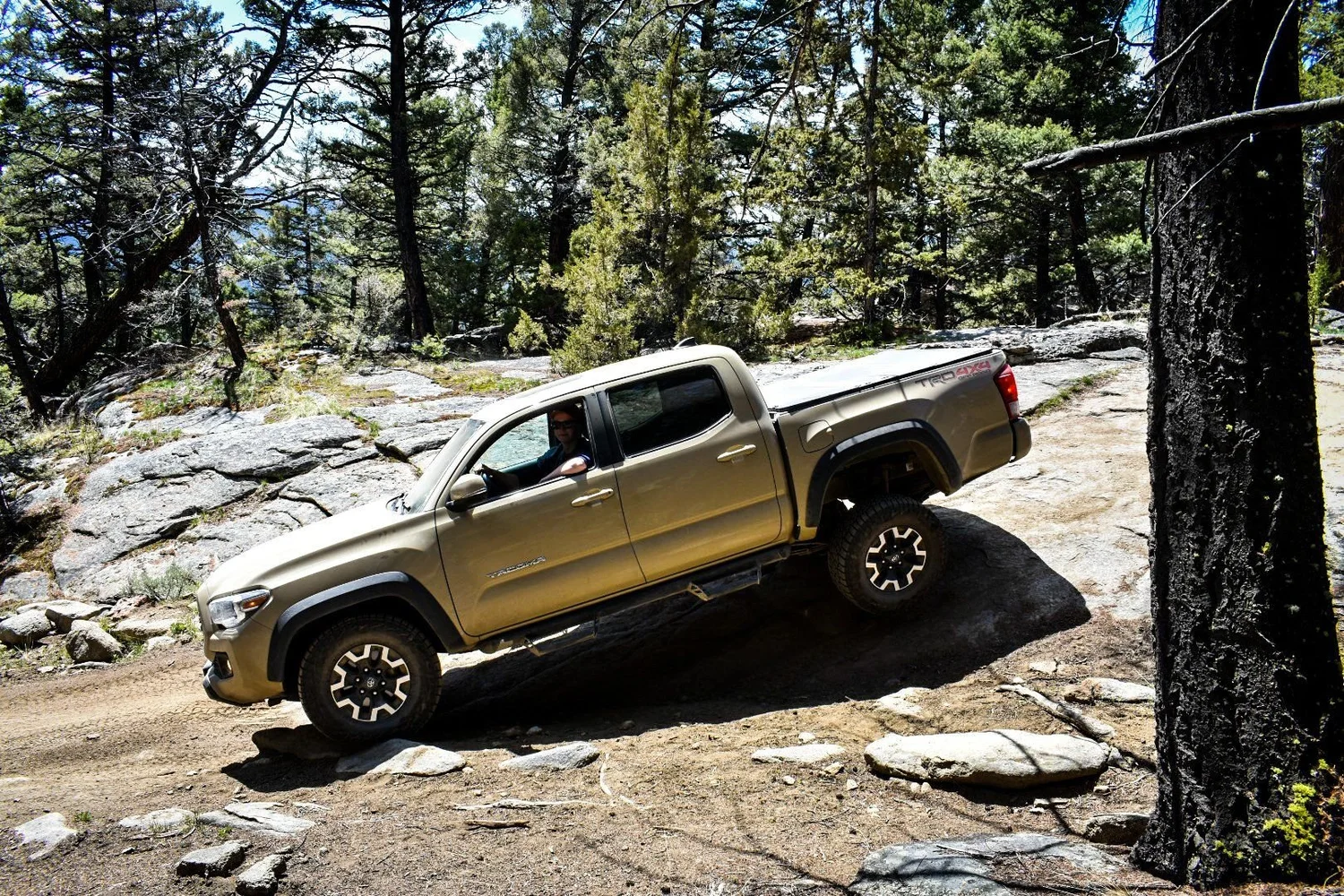
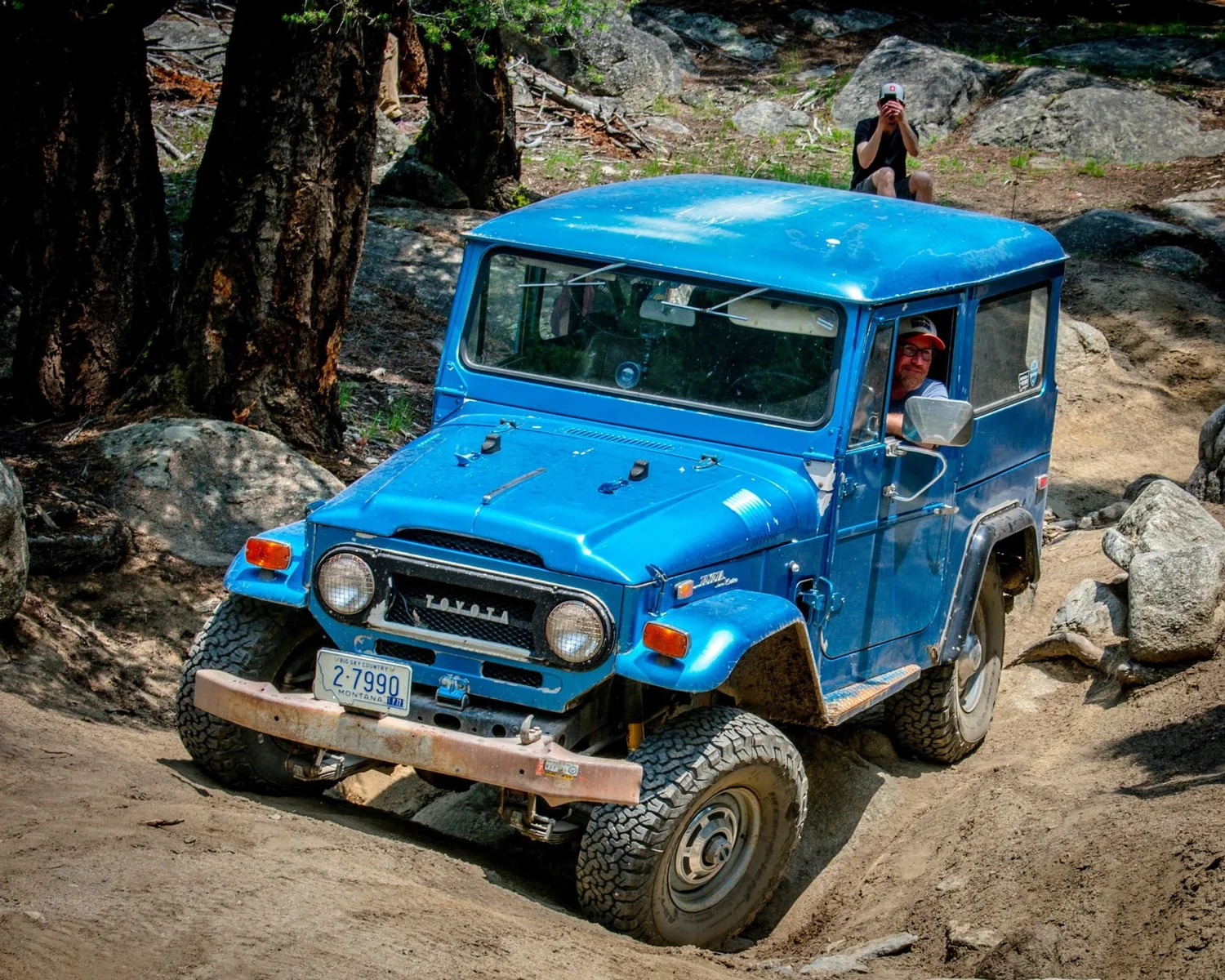
Boulder gaps. The gaps between boulders are tighter than they look. Fold the mirrors, get out and look, and use a spotter.
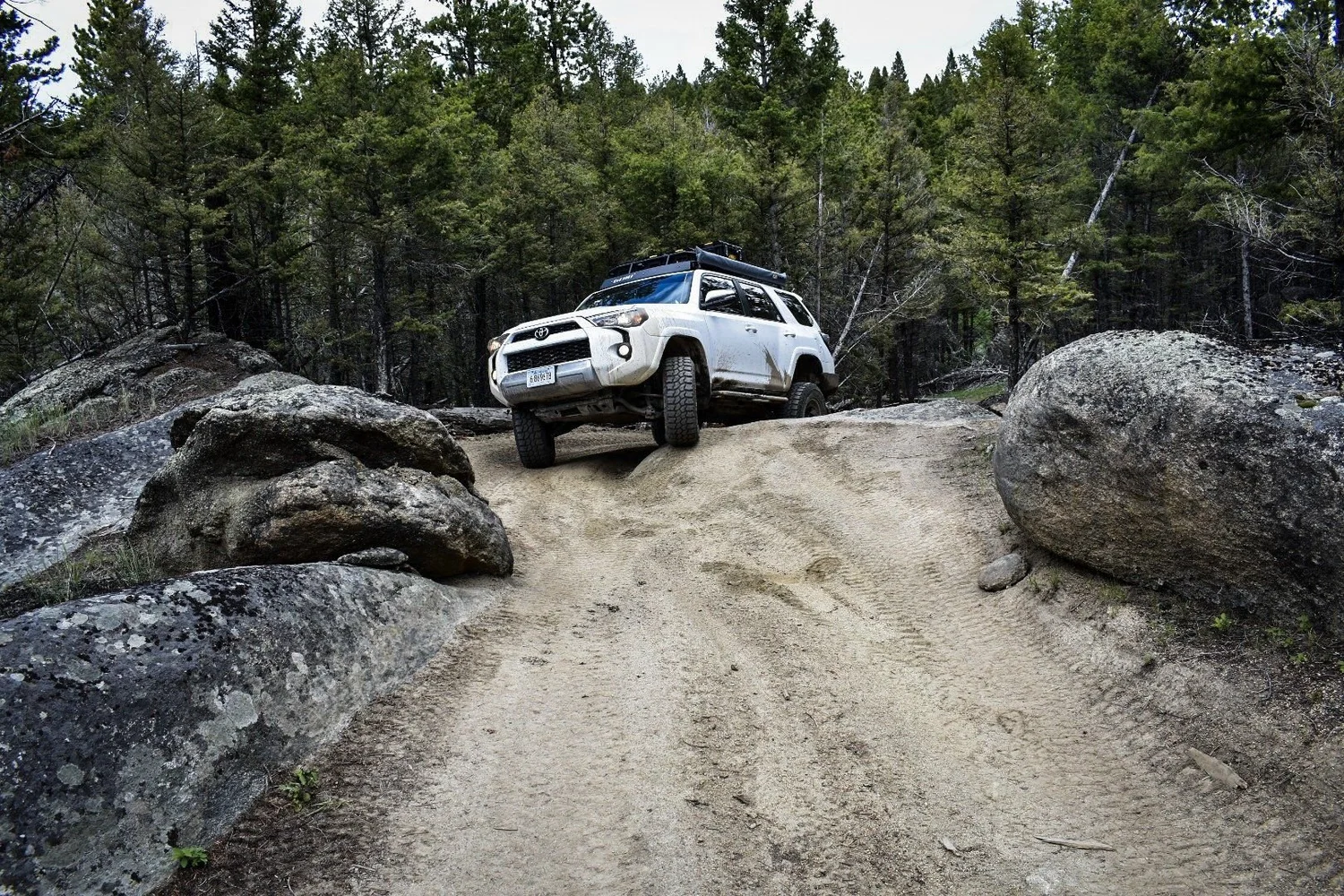
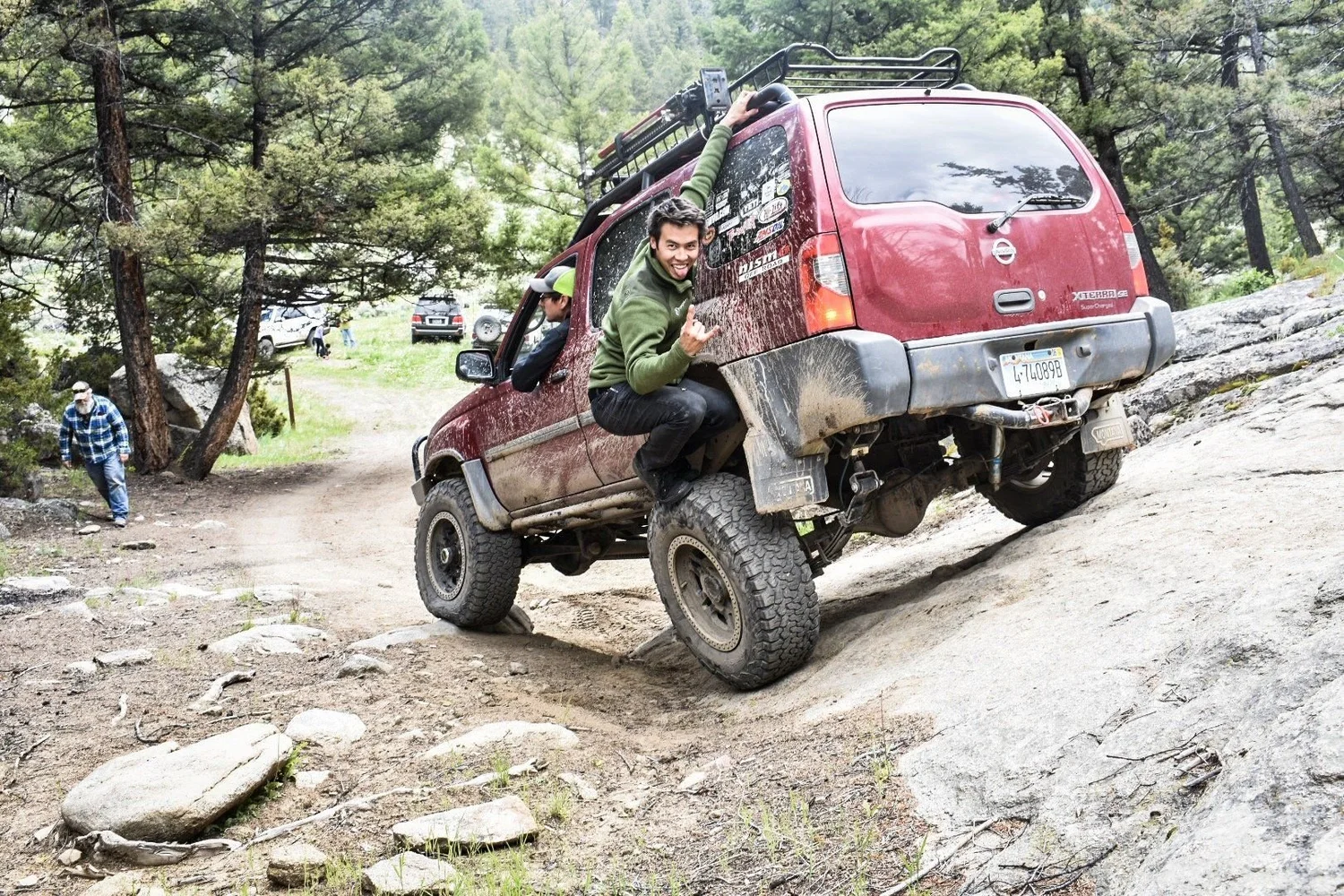
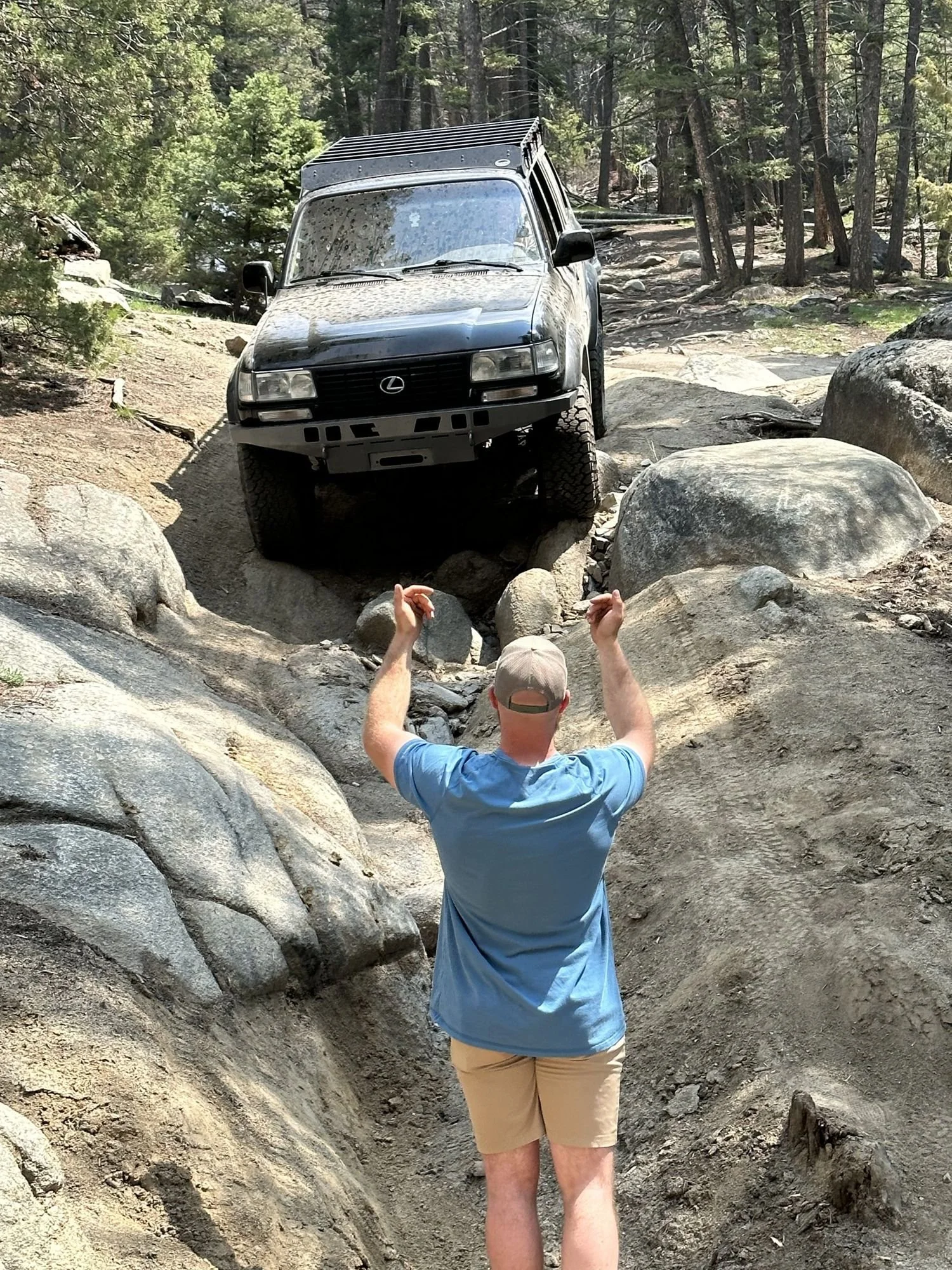
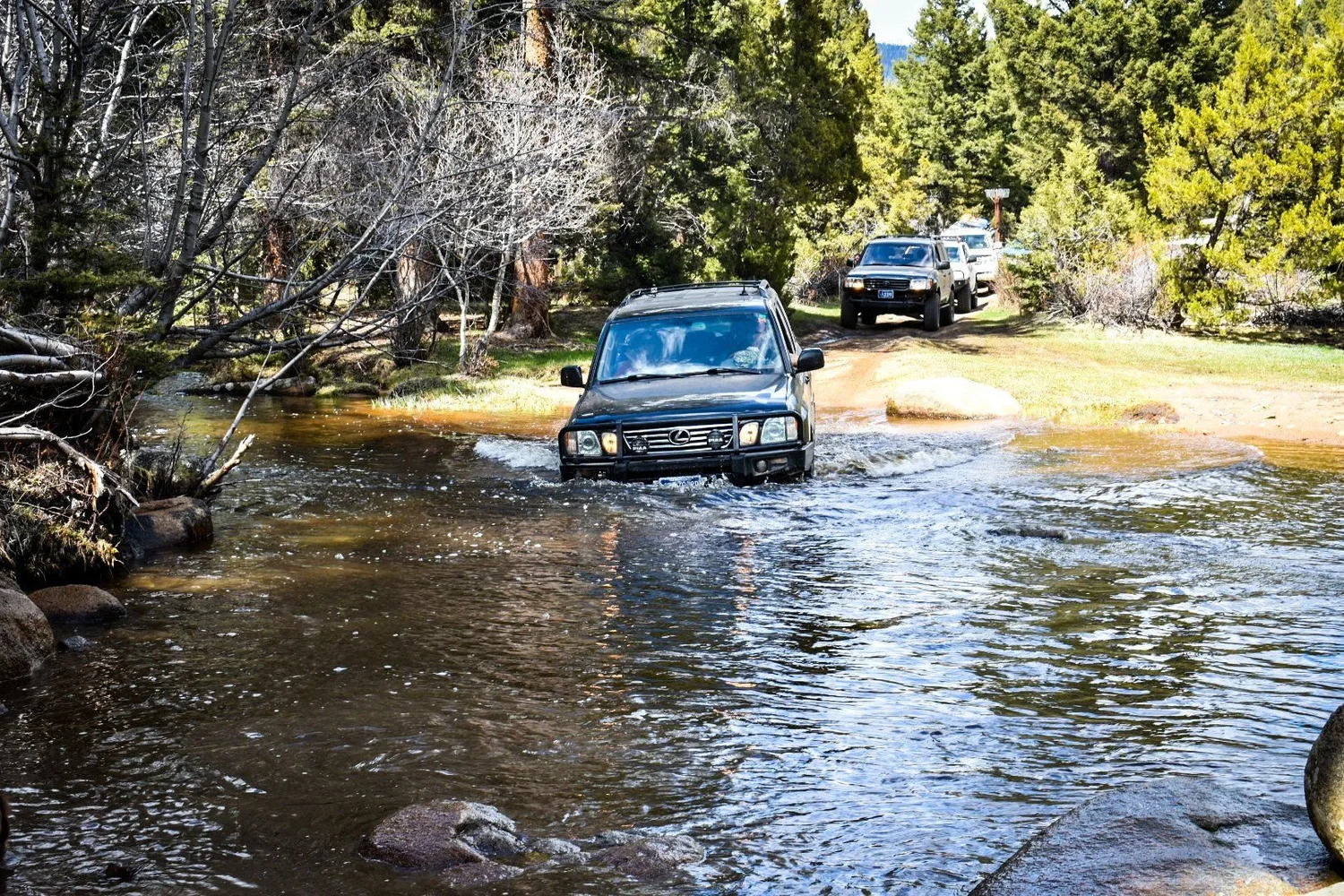
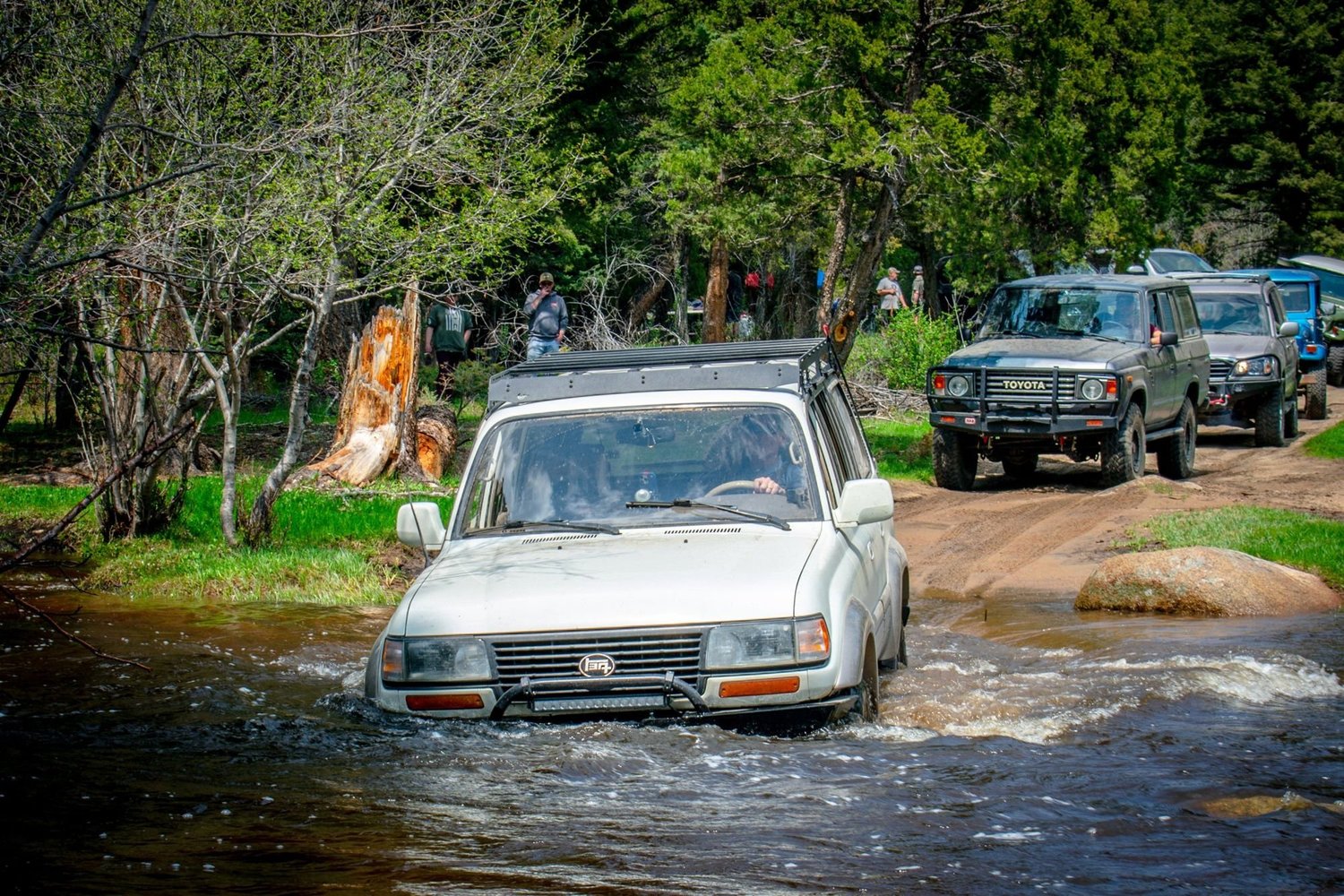
Creek crossings. Spring trips mean high water. Walk it first, go slow enough to keep a bow wave, and don’t stop in the middle.
Six Trips, Six Different Days
2017. First trip. Tan FJ, a white 60 Series, and the rocks themselves.
2018. Combined with a run along the Elkhorn skyline.
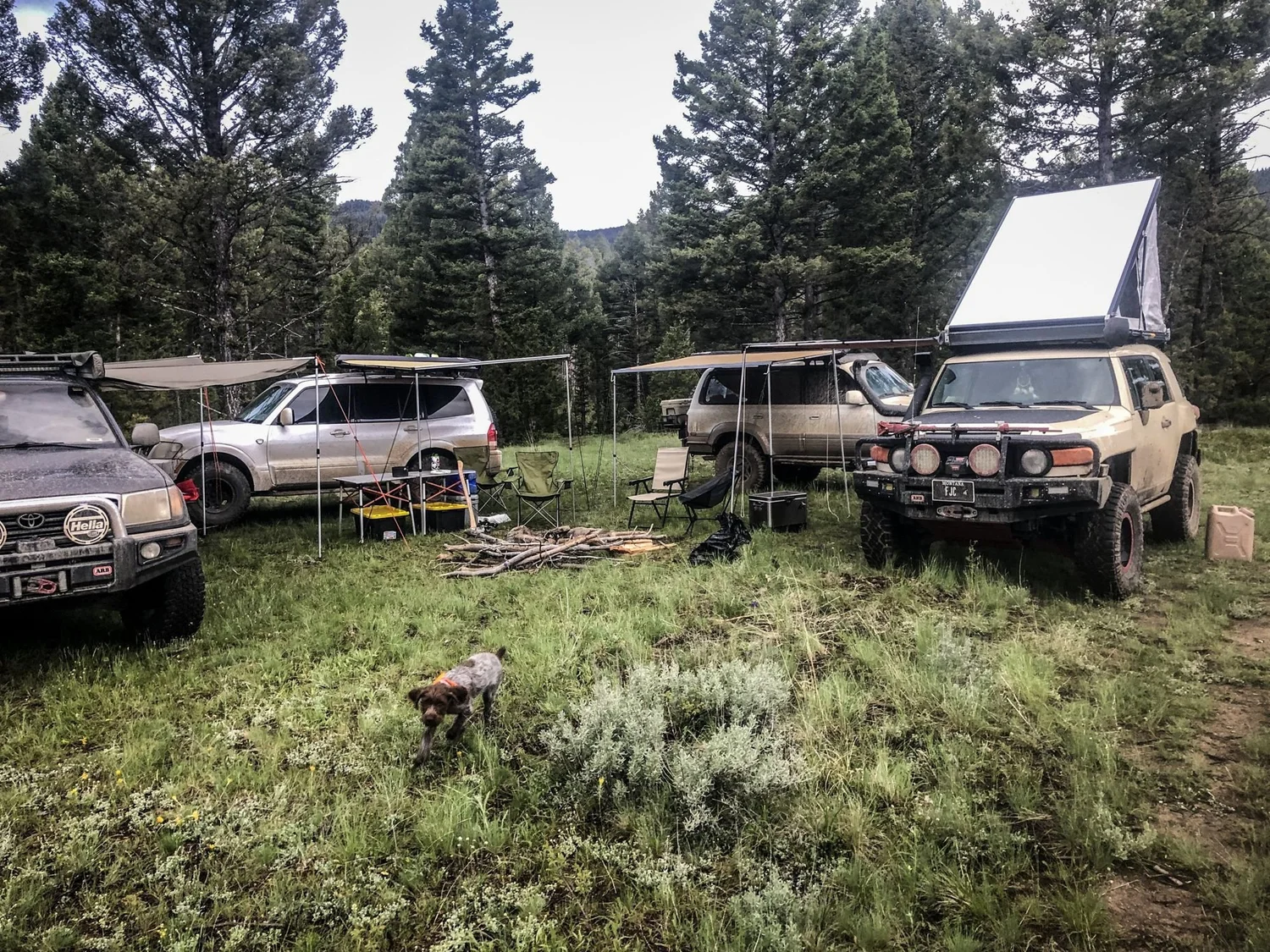
2019. Camp below a granite dome and a lot of slab time. There’s a “Nonmaintained Access Road” sign on the way in, and it means it.
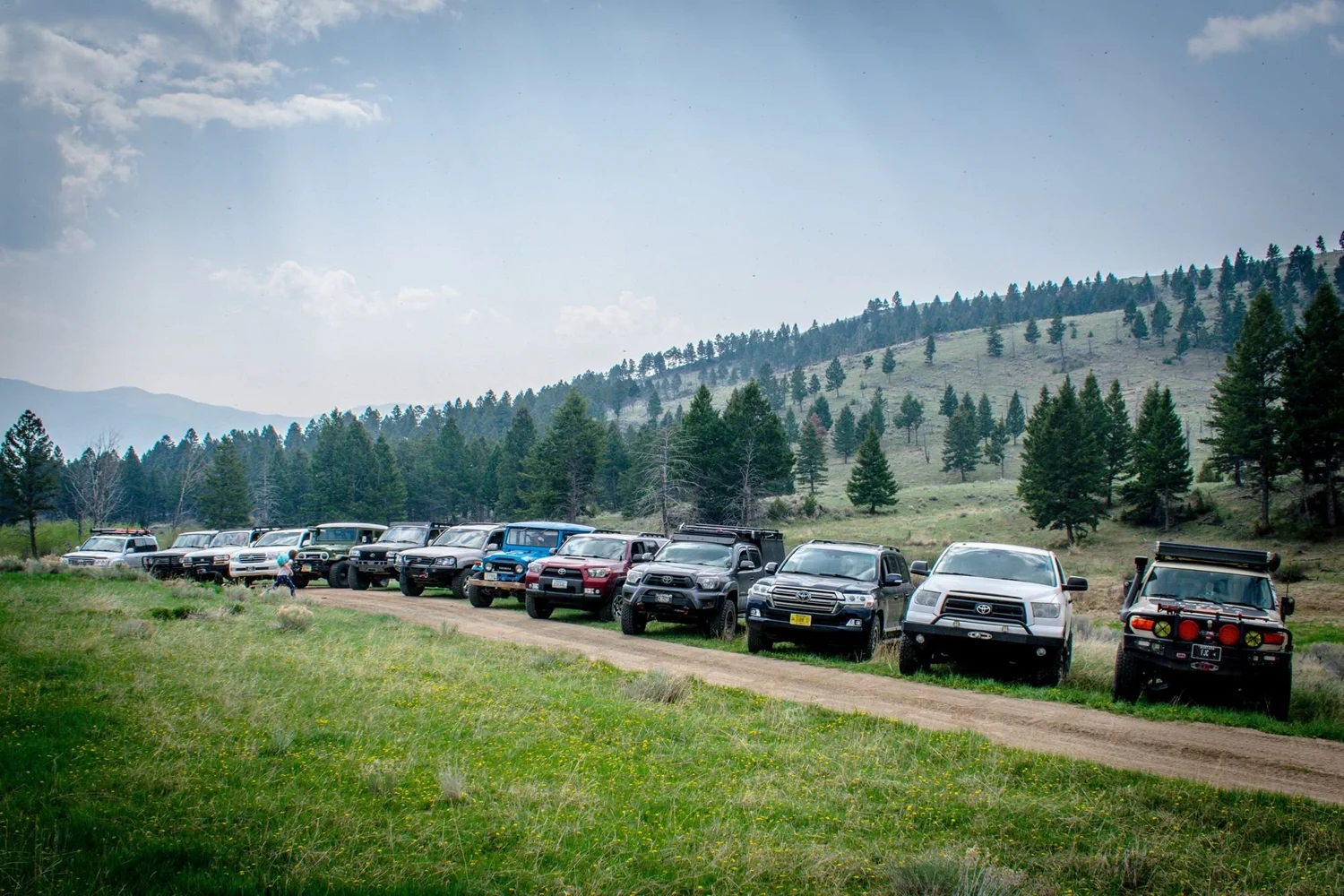
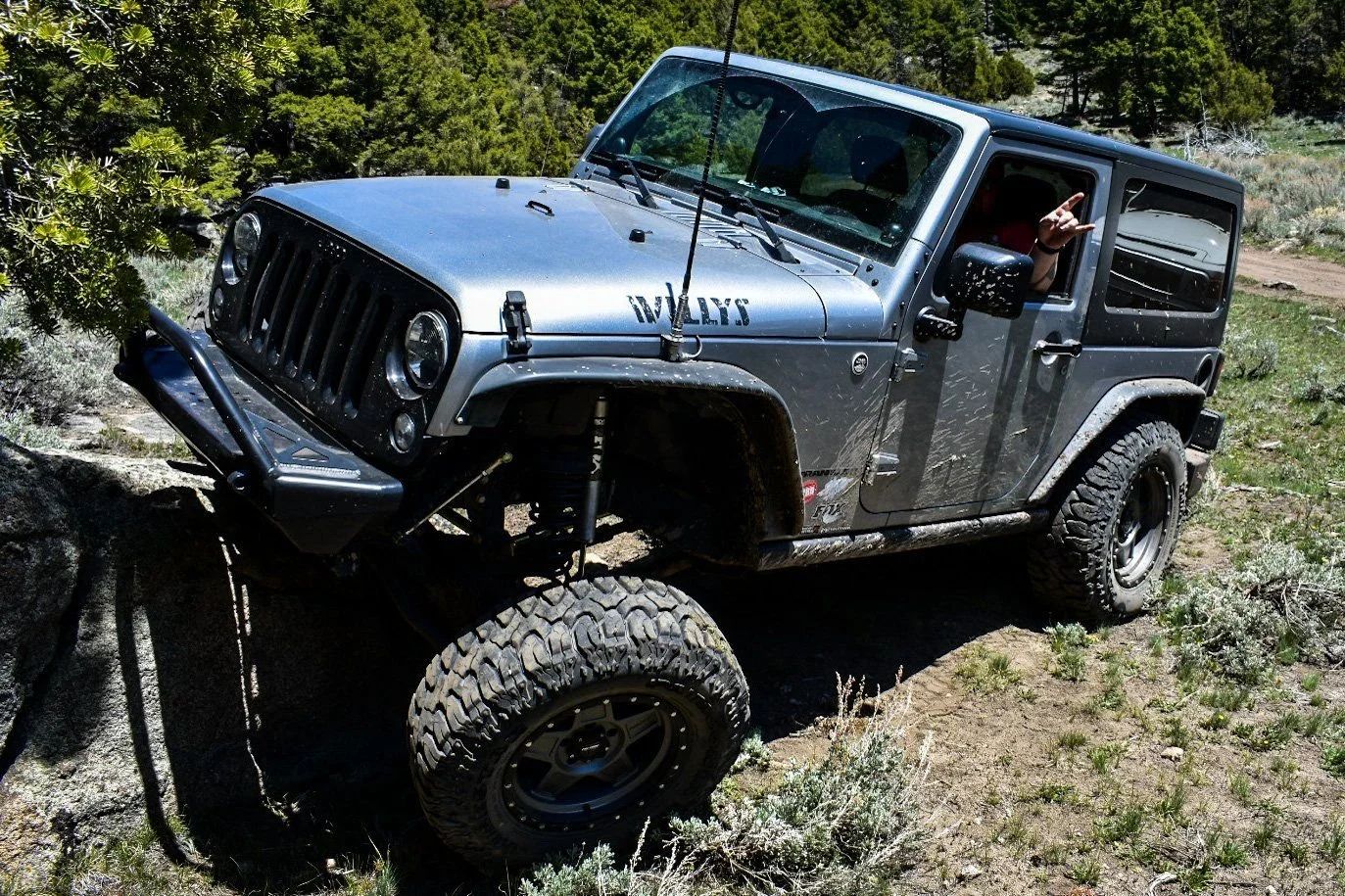
2020. High creek crossings and a mixed group of Land Cruisers, 4Runners, a Tacoma and an FJ.
2021. A friend brought a drone. Everyone else brought something with a lift.
2023. The 406 Cruisers club run: a long line of Land Cruisers, two FJ40s and a lot of spotting.
Know Before You Go
Season. Late spring through fall. Spring brings higher creeks and muddier ruts.
Vehicle. High clearance is required to reach the rocks. For the trails around them, bring real tires, recovery gear and a friend.
Leave it. The rocks only ring where they are.
Nearby: the Pipestone area has its own trails, including the Bobsled Run. For another Montana trail with history, see driving through the Wickes Tunnel. And if the FJ40s here have you shopping, start with the FJ40s of 2026.
More From Ringing Rocks
Want Your Shots?
Every image is available as a full-resolution JPEG, RAW file or a custom edit, crop, print or social version.
Tell me the truck, which photo and what you need. Call or text 406-404-6913.
Never Lift.
Drive Fast · Take Chances · Never Lift
