
SIZING UP THE MENACE: HOW SMALL IS THE HONDA BEAT? (SPOILER: IT DWARFS THE FIATA)
When you look at the spec sheet for a 1991 Honda Beat, the numbers look like a typo. You see words like "kei car" and you read the dimensions, but your brain doesn't truly process the reality until you park it next to normal traffic.
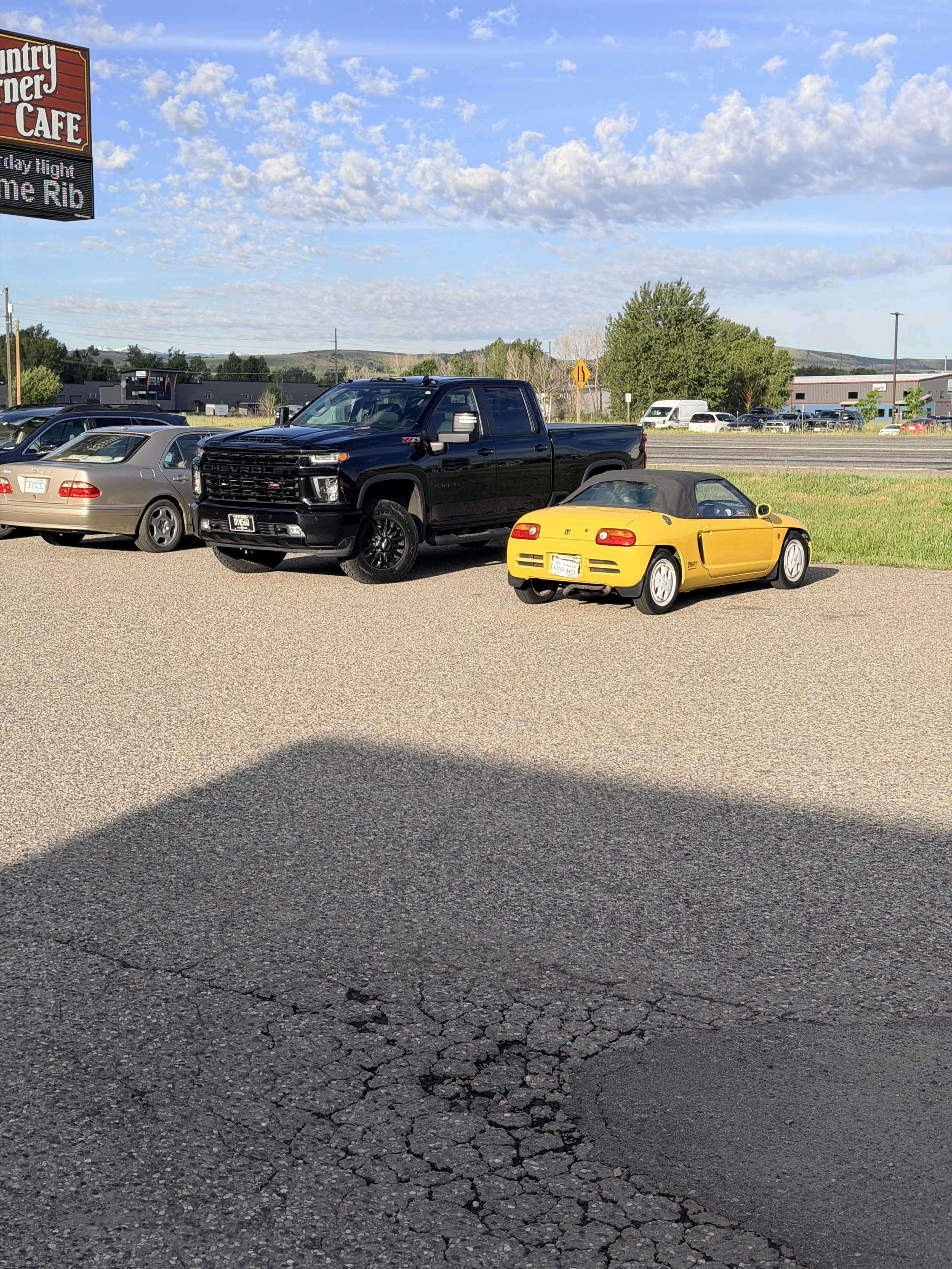
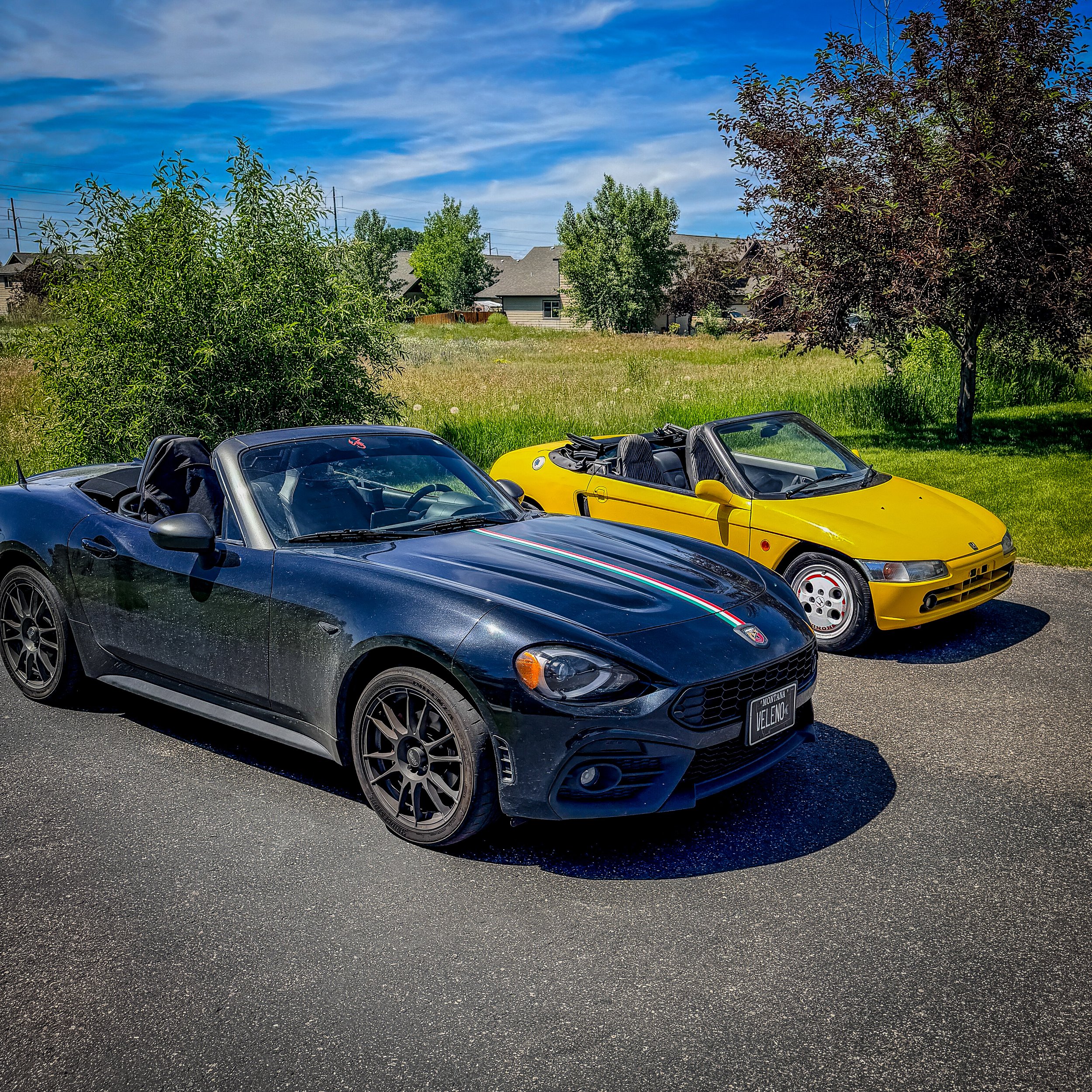
I finally got the Beat out on the asphalt next to some "regular" sports cars, and the visual comparison is downright hilarious. It makes a modern Fiat 124 Spider—affectionately dubbed the "Fiata"—look like a massive, bloated supercar.
The David vs. Goliath Spec Sheet
To put this into perspective, let’s look at how the Beat stacks up against the Fiata and my 80-series Land Cruiser.
Quick answer: The 1991 Honda Beat is 129.7 inches (3,295 mm) long, 54.9 inches (1,395 mm) wide and 46.3 inches (1,175 mm) tall, and weighs about 1,676 pounds (760 kg). That makes it roughly 30 inches shorter, 14 inches narrower and 800 pounds lighter than a Fiat 124 Spider Abarth.
| Spec | 1991 Honda Beat (PP1) | Fiat 124 Spider Abarth (US) |
|---|---|---|
| Length | 129.7 in (3,295 mm) | 159.6 in (4,054 mm) |
| Width | 54.9 in (1,395 mm) | 68.5 in (1,740 mm) |
| Height | 46.3 in (1,175 mm) | 48.5 in (1,232 mm) |
| Wheelbase | 89.8 in (2,280 mm) | 90.9 in (2,309 mm) |
| Curb weight | 1,676 lb (760 kg) | About 2,477 lb (1,124 kg), manual |
| Engine | 656 cc E07A inline-3, naturally aspirated, mid-mounted | 1.4-liter MultiAir turbo inline-4, front-mounted |
| Power | 63 hp (64 PS) at 8,100 rpm | 164 hp at 5,500 rpm |
| Torque | 44 lb-ft at 7,000 rpm | 184 lb-ft at 2,500 rpm |
| Layout | Mid-engine, rear-wheel drive, 5-speed manual | Front-engine, rear-wheel drive, 6-speed manual or automatic |
| Top speed | 84 mph (135 km/h), electronically limited | — |
Beat figures from Honda’s May 1991 launch announcement; top speed from period road tests. Fiat figures are for the 2017–2019 US-market Abarth.
The Fiata is universally considered a small, nimble, lightweight two-seater. Yet, the Honda Beat is about two and a half feet shorter and more than a foot narrower. It weighs nearly 800 pounds less than the Fiat.
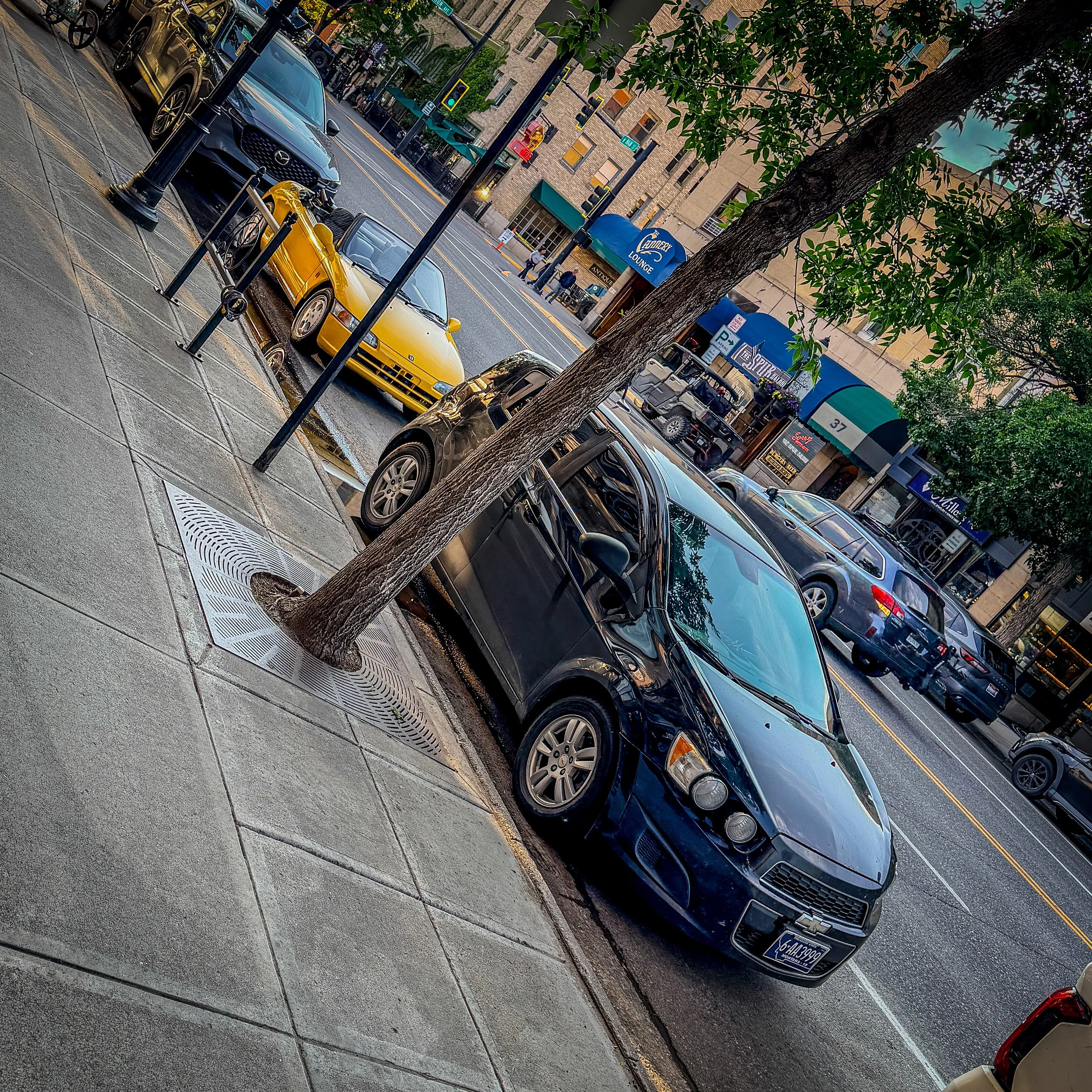
When you park them nose-to-tail, the Fiata looks like a heavyweight contender. If you park the Beat next to a modern full-size heavy-duty truck, the Beat’s roofline barely clears the truck's front bumper. You don't just park this car; you practically stash it.
Forced Perspective (Without the Forced Part)
Seeing them side-by-side in the wild is pure comedy. The Beat looks like a 3/4-scale go-kart replica of a real automobile. You sit so low to the ground that your rear end is practically scraping the yellow paint off the road markings, and looking over at the modern sports car beside you feels like looking up at a semi-truck.
But that's exactly where the magic lives. Because it's scaled down to the absolute bare minimum required to house a human and an engine, the physics change completely. Every tight corner feels like an Olympic event, and finding a parking spot in downtown Bozeman has never been easier. You could practically fit two of these in a standard parallel space.
It turns out you don't need a massive footprint to command massive attention.
Small footprint. Maximum revs.
Keep reading: Pint-Sized Pandemonium: Why The Honda Beat Is The Ultimate Anti-Modern Antidote · The Look Of Loud: Choosing The Perfect Livery For The Honda Beat · So You Think You Want a Honda Beat?