

Read this before buying a 40-year-old family wagon with a carburetor, a vacuum-hose maze and a tailgate that may be mostly Bondo.
So You Think You Want a 60 Series
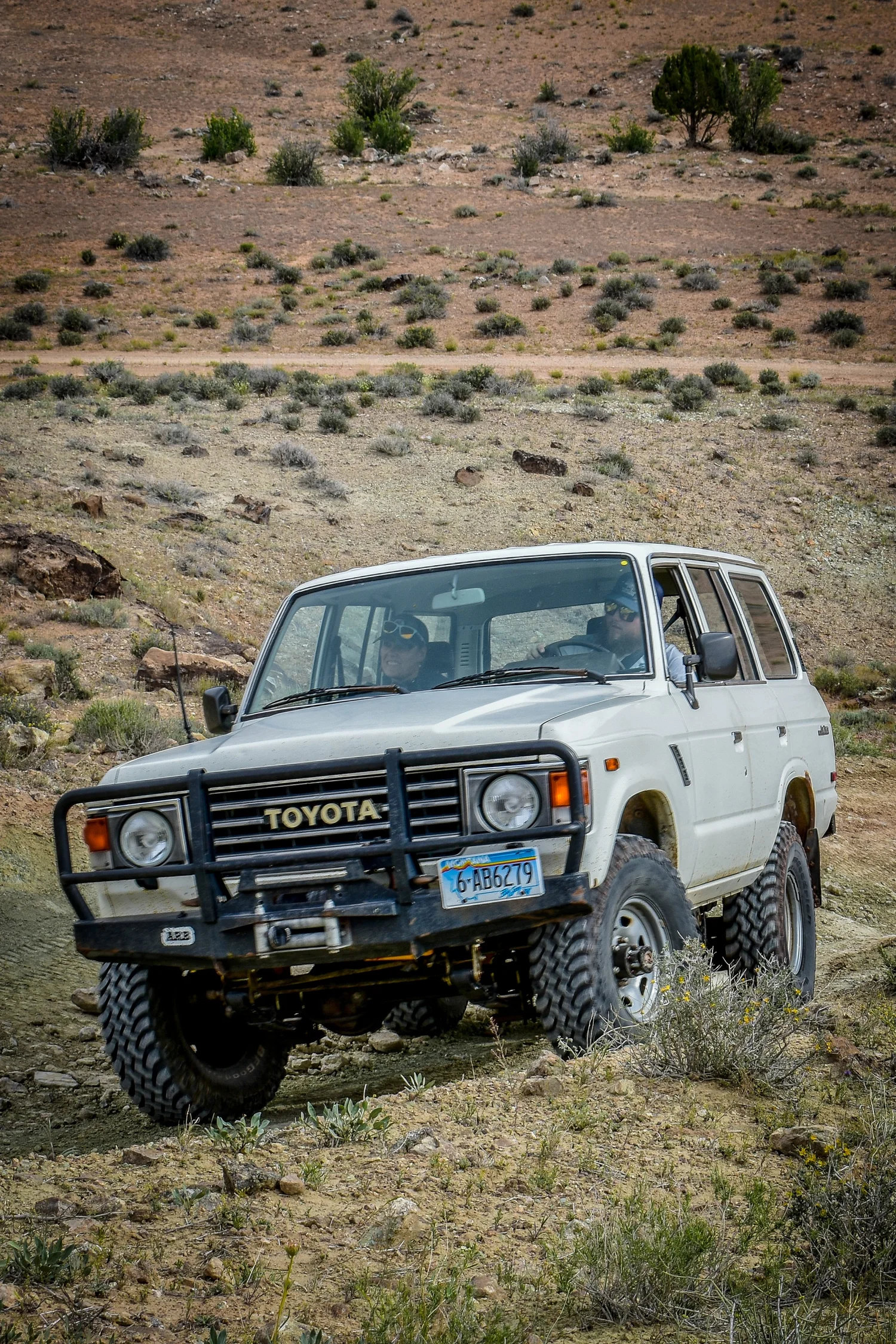
You probably do. The FJ60 and FJ62 are where the Land Cruiser learned to carry a family, a cooler and a dog without giving up the solid axles, the leaf springs or the stubbornness.
They are also old, heavy, slow and very good at hiding rust behind trim panels. Buy the metal first. Everything else is a parts order.
Buy the Metal, Then the Miles
A 2F or 3F-E six that has been ignored can be rebuilt. A carburetor can be rebuilt. Vacuum lines can be replaced one cracked hose at a time. Rotten frame rails, rusted roof structure and a windshield frame full of rust are a different conversation entirely.
The 60 Series rides on a fully boxed frame, and these trucks are now 35 to 45 years old. Corsetti Cruisers, a shop that builds these trucks, puts it bluntly: truly rust-free examples are rare. Shop the body like it is the whole truck, because financially it is.
FJ60 vs. FJ62 Basics
The 60 Series was built from 1980 through 1990 for most markets, and Venezuela kept building them until 1992. In the US it splits cleanly in two: the round-headlight, carbureted FJ60, and the square-headlight, fuel-injected FJ62 that arrived for 1988.
Seller descriptions are often wrong. Plenty of ads call every 60 an "FJ60," including diesels and Canadian or imported trucks. Verify the VIN, the engine and the transmission yourself.
1981–Early 1985
- 2F 4.2-liter carbureted inline six, rated around 135 hp and 210 lb-ft.
- H42 four-speed manual in US trucks. Toyota never sold the H55F five-speed here.
- Round headlights.
- Pre-April 1985 trucks have the shorter H42, so a five-speed swap means changing driveshaft lengths.
Mid-1985–1987
- Same 2F, carburetor and smog plumbing.
- Around April 1985, Toyota added a spacer so the US four-speed matched the H55F's length.
- That makes an H55F five-speed swap close to bolt-in on these trucks.
- Still a four-speed from the factory. A five-speed in a US FJ60 is a conversion, not an option.
1988–1990 FJ62
- 3F-E 4.0-liter fuel-injected six, 155 hp in US spec.
- A440F four-speed automatic in US trucks.
- Square headlights, and options like power windows and locks.
- Fewer FJ62s were sold than FJ60s, and clean ones now lead the market.
Fuel injection retires the carburetor and most of the vacuum-hose drama. The trade is an automatic and more electrical bits to diagnose.
Diesels, High Roofs & Imports
- Other markets got diesels (2H, 3B and the 12H-T turbo diesel from 1985), five-speeds and carbureted 3F gas engines.
- High-roof bodies and right-hand-drive trucks turn up as imports.
- Confirm the title, VIN and import paperwork match the truck in front of you.
Parts and fitment can differ from US trucks, so know which truck you are actually buying.
Where the 60 Likes to Rust
Ask anyone who owns one what to check on a 60 and the answer is some version of "rust, rust, rust." These are the spots owners and builders call out again and again. Start here before you ever listen to the engine.
Rear Frame Rails
Check the frame behind the rear axle and around the spare. You may need to drop the spare tire to see it. Corsetti calls rusted-out rear rails a reason to walk away.
Windshield Frame Corners
Original windshields often hide rust in the corners under the gasket. Look for bubbled paint and gently peel the rubber back. The shape makes this an expensive repair.
Roof Drip Rails
The gutters rust on a lot of 60s. Surface rust is common. Rust that has spread into the roof structure is a reason to keep shopping.
Tailgate and Hinges
Open the tailgate and look at the hinge area and the bottom edge. Patches are usually easy to spot. Replacement tailgates exist, but original solid steel is worth more.
Rear Wheel Arches
The rear wheel arches and lower quarters are where nearly every 60 starts to rot. Run your fingers along the inner lip. Mismatched or missing mud flaps can be a sign of patch work.
Inner Rear Wheel Wells
Fold the rear seat and peel back the inner wheel-well trim. Most trucks have some rust here. It is fixable, but it tells you how the truck has lived.
Front Fenders
Easy to see from the outside. Bad rust here usually means a replacement fender, and the lower trim molding will not mount cleanly to a rough patch.
Floors and Rockers
Lift the mats and check the driver's floor, the rockers and the sills. Owners also flag rocker panels as a common rot spot.

Then Check the Mechanicals
Carburetor
Expect to rebuild it. Stumbling, hesitation and a truck that only runs with the choke out point here or at the EGR valve. Corsetti prices a good rebuild kit around $300.
Smog Gear and Vacuum Hoses
There are dozens of feet of vacuum line on an FJ60. Owners report a pile of vacuum switches that can fail. A cracked hose is the most common cause of a poor-running 2F, so check those before blaming anything bigger.
High-Altitude Compensation
1981–1987 FJ60s have a high-altitude compensation (HAC) system that adjusts timing above roughly 3,930 feet. Bozeman sits well above that. Swapping to an aftermarket carb can bypass it and cost you performance.
Knuckle Sludge
Grease weeping out of the steering knuckles means the seals are leaking. It is not a deal-breaker, but Corsetti estimates $200–$600 to reseal, and it takes real labor.
Compression on High-Mile 2Fs
On trucks past 200,000 miles, run a compression test. Corsetti's numbers: 160–165 psi is excellent, under 120 calls for caution, under 100 is a no-go, and readings should be within about 10% of each other.
Lifted Trucks and Wobble
Lifts add stress to the steering. A truck that shakes violently after a bump needs attention. If it still vibrates with a smooth steering wheel, the driveshaft may need balancing.
Pads, Lines and Bearings
A proper front brake job on a 60 includes repacking the front wheel bearings. Pull a wheel if you can. Old rubber brake hoses are common leak points.
Driver Seat and Seals
Torn driver's seats are close to universal. Dried-out door and window seals let water in, and water is how the floors start rotting.
A Restored 60 Needs Evidence
Bare-Metal Photos
Ask for photos of the frame, floors, quarters and tailgate before paint went on. "Fully restored" with no photos is a sales pitch.
Steel Repairs
Welded-in steel is a repair. Filler over screen or fiberglass is a cover-up. A magnet will tell you which one you are looking at.
Engine and Smog Status
Is the smog equipment intact, removed or disconnected? Where you register the truck decides how much that matters.
Swap Documentation
Five-speeds, engine swaps and axle swaps should come with parts lists and receipts, not just a story.
VIN and Identity
Make sure the VIN, title and engine match what the ad says it is.
Climate History
Ask where the truck has lived. A dry-climate truck almost always has a better frame and body than a salt-state truck.
Walk Away—or Adjust the Price?
- Rotted rear frame rails
- Rust in the roof structure
- Windshield frame rot
- Sloppy welds or patched structural metal
- Compression under 100 psi
- Carburetor rebuild
- Vacuum hose and smog sorting
- Knuckle reseal
- Inner wheel-well patches
- Torn seats and tired seals
- Dry-climate history
- Service records and owner history
- Compression numbers on paper
- Original, unpatched lower quarters
- Honest seller photos underneath
Inspect the Wagon, Not the Wax Job
Check each item as you verify it on the actual truck. Not in the ad photos. On the truck.
Baseline Before You Beautify It
Before lift kits, lights and racks, find out what you actually bought.
Mechanical Baseline
- Every fluid: engine, transmission, transfer case, both diffs
- Knuckle service and wheel-bearing repack
- Belts, hoses and coolant
- Brake pads, hoses and fluid
- Compression numbers for your records
FJ60-Specific
- Vacuum-line inspection, end to end
- Carburetor rebuild or tune
- EGR and HAC function check
- Steering damper and front-end check
- Driveshaft balance if it vibrates
What Are 60s Actually Selling For?
Updated October 2026.
Clean 60s are no longer cheap. Recent Bring a Trailer results run from the low $30,000s for a high-mile original FJ60 to around $50,000 for a low-mile FJ62. Tired, rusty or high-mile trucks can still fail to sell at much lower bids.
| Status | Truck | Location / Miles | Price / Date | AGF Note |
|---|---|---|---|---|
| Sold | 1989 FJ62 | Salt Lake City, UT · 106k mi | $50,575 Oct 22, 2025 · Bring a Trailer | Low-mile, original automatic FJ62. This is what the top of the driver market looks like. |
| Sold | 1985 FJ60 | Marietta, GA · 216k mi (TMU) | $42,000 May 28, 2026 · Bring a Trailer | Listed as custom with an automatic, which a US FJ60 did not have from the factory. Modified trucks can still bring strong money. |
| Sold | 1986 FJ60 | Broward County, FL · 263k mi | $33,000 Mar 8, 2026 · Bring a Trailer | Original manual FJ60 with big miles. A useful baseline for a driver. |
| Sold | 1987 FJ60 | Dallas, TX · Silver | $40,700 Sep 2022 · Mecum | An older result, but proof the last-year FJ60 has been strong money for years. |
| Not Sold | 1990 FJ62 | Johns Creek, GA · 210k mi | High bid $19,001 Apr 11, 2024 · Bring a Trailer | High miles kept bidders cautious. Condition, not the badge, sets the price. |
| Benchmark | Classic.com Market Benchmarks | US market | FJ60 ≈ $32,300 FJ62 ≈ $34,400 | Benchmarks shown on Classic.com's FJ60 and FJ62 market pages. Use them as a sanity check, not an appraisal. |

Best Value
A high-mile, original FJ60 with solid steel. The $33,000 1986 sale shows that big miles do not kill the value if the body is honest.
Best Driver
A well-kept FJ62. Fuel injection and the automatic make it the easiest 60 to live with, and the market pays for that.
Market Outlier
Custom builds and swaps sell to a different buyer. Judge them on the quality of the work and the paperwork, not the parts list.
60 Series Buyer FAQs
Should I buy an FJ60 or an FJ62?
The FJ60 is simpler, with a carburetor and a manual. The FJ62 is easier to live with, with fuel injection and an automatic. Buy whichever one has the better frame and body.
Did any US FJ60 come with a five-speed?
No. US FJ60s came with the H42 four-speed. The H55F five-speed went to other markets. Trucks built from around April 1985 have a spacer that makes a five-speed swap much easier.
Did the US FJ62 come with a manual?
US FJ62s came with the A440F four-speed automatic. Manual FJ62s exist, but they are imports or conversions.
What is the biggest thing to check?
Rust. Start with the rear frame rails, then the windshield corners, roof gutters, tailgate and rear wheel arches.
Will a 2F run right at Montana elevation?
It can, if the factory high-altitude compensation system is working. Corsetti notes it matters above roughly 3,930 feet, and some aftermarket carburetor swaps bypass it.
Is a 60 Series fast?
No. Corsetti describes the stock 2F FJ60 as limited to around 65 mph in practice. Buy one for the trail, not the passing lane.
Source Material
Wikipedia: Toyota Land Cruiser (J60)
Production years, engine changes and the US 3F-E rating.
Open Article ↗Corsetti Cruisers: 7 Rust Spots
The rust checklist this guide's inspection section follows.
Open Article ↗Corsetti Cruisers: 6 Common FJ60 Problems
Carburetor, vacuum lines, HAC, knuckles, steering and compression numbers.
Open Article ↗IH8MUD: FJ60 Transmission Question
Owners on the US four-speed, the 1985 spacer and why US trucks never got a five-speed.
Open Thread ↗IH8MUD: FJ60 Common Problems
Owner advice on rust areas, carburetors and emissions gear.
Open Thread ↗Off-Road.com: H55F Swap on an 08/85 FJ60
Why post-April 1985 FJ60s are the easy five-speed swap.
Open Article ↗Buy the 60 With the Best Steel—Not the Best Story.
A solid 60 Series is comfortable, mechanically simple and still one of the most useful old trucks you can put on a trail. A rotten one will eat a restoration budget before you ever buy the first set of tires.
Check the frame. Then the gutters. Then the tailgate. Then fall in love.
Gutters before gear.
Floors before upholstery.
Records before restoration claims.
And if somebody says "it's just a little surface rust," bring a magnet.
Educational buyer guide only. Not a substitute for a professional pre-purchase inspection, Toyota service information or a qualified body inspection. Specs and equipment vary by year, market and prior modifications. Market figures reflect the listed sales and benchmarks as of October 2026. Aaron Goes Fast is not affiliated with Toyota, IH8MUD, Corsetti Cruisers, Bring a Trailer, Hagerty, Classic.com or Wikimedia.